 US Dollar
 Euro
Euro
 Australian Dollar
 Canadian Dollar
 Polish Zloty
 British Pound


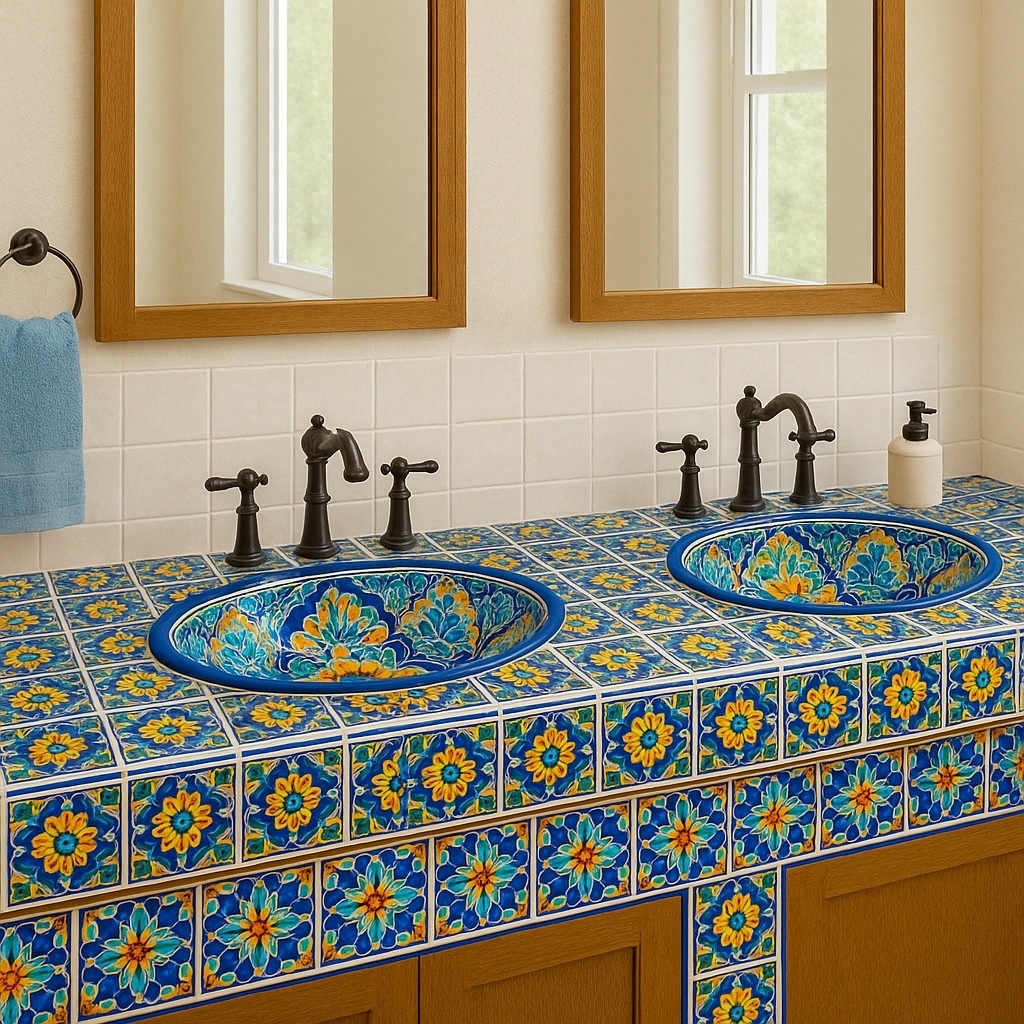
Your sink size controls comfort, clearance, and daily cleanup. It also shapes the whole vanity look. This guide keeps sizing simple. It uses real measurements. It avoids vague rules. Start by viewing our Mexican bathroom oval sinks. Then use the steps below. You will choose with confidence. You will reduce install risk. You will also prevent awkward proportions. Let’s find your best fit.
Why sink size matters more than most people expect
Sink size impacts how your bathroom feels because it controls elbow room, reach, and how clean the counter stays after each use. A sink can look perfect online and still feel wrong once installed, simply because the scale is off for the vanity and the room. Oval sinks add softness compared to rectangles, but they still need strong proportion control so the vanity looks intentional instead of crowded or undersized.
Start with the vanity width, not the sink
Your vanity width sets the true range of sink sizes that will look balanced and function well. Measure the top width first and treat it as the boundary for side clearance, daily item space, and symmetry. When you begin with the vanity, you avoid the common mistake of choosing a sink that technically fits, but leaves no landing space for soap, hand towels, and routine cleanup.
Use these width guidelines as a baseline
For a 24 inch vanity, a compact oval usually looks best because it preserves usable counter space and keeps the sink centered. For a 30 inch vanity, you can step up in width while still maintaining breathing room on both sides. For a 36 inch vanity, wider ovals and deeper bowls can work well as long as you keep practical landing space and enough sealing area around the rim to protect the counter edge from moisture.
Plan for side clearance on both sides
Side clearance keeps the vanity functional and makes the sink look “placed” rather than squeezed in. Even spacing on both sides reads calm and designed, while uneven spacing can make the whole vanity feel off. Small vanities need stricter discipline because there is less margin for error, but even on wider tops, symmetry tends to look cleaner and feel better in everyday use.
Measure vanity depth and wall position
Vanity depth can make or break comfort because it controls how far the sink projects toward the user and how much counter space remains in front of the bowl. Measure depth next, then account for wall position, backsplash thickness, and any trim that steals space. A sink that is too deep can force you forward, reduce walking clearance, and interfere with drawers or doors depending on your layout.
Choose a sink that preserves front counter space
Front counter space acts as a buffer zone for drips and gives your hands a comfortable place to rest while washing. Too little front margin can increase splashing and make the vanity feel cramped, especially in smaller bathrooms. If your vanity is shallow, choosing a smaller oval profile and avoiding oversized rims helps preserve that front buffer so the setup stays comfortable and easy to keep clean.
Watch for door swing and traffic paths
Bathrooms have tight circulation, and door swing can turn a “fits on paper” vanity into a daily annoyance. Stand at the vanity location and imagine normal movement, including passing behind someone who is using the sink. If the sink depth makes the zone feel tight now, it will feel tighter during real life routines, so it is smarter to size down and protect clearance rather than chase maximum bowl size.
Know the three sink dimensions that matter most
Most product listings show many measurements, but three matter most for comfort and proportion: outside width, outside depth, and bowl depth. Outside width controls how much space the sink takes across the vanity, outside depth controls reach and clearance, and bowl depth affects splash control and washing comfort. When you focus on these three, you can compare options quickly without getting lost in extra specs.
Outside width controls scale and counter space
Outside width is the sink’s widest point, and it determines both visual balance and how much usable counter remains. Wider is not always better because it can crowd faucets, soap dispensers, and daily items, especially on smaller vanities. A well-sized oval leaves enough room for a clean landing zone on each side, plus a little buffer area that keeps water from constantly pooling near the edge.
Outside depth controls reach and clearance
Outside depth controls how far you lean and where the faucet needs to land water. A sink that is too deep can feel awkward for daily use and can reduce the comfortable standing zone in front of the vanity. A sink that is too shallow can increase splash depending on faucet height and flow. The best fit balances depth with faucet reach so water falls near the bowl center rather than hitting the rim or back wall.
Bowl depth controls splash and washing comfort
Bowl depth affects how contained the water stays during handwashing and face washing, and it also changes the “feel” of the sink in daily routines. Deeper bowls often reduce splash and feel more generous, but they may require a taller faucet and careful reach planning. Shallower bowls can look sleek and modern, yet they may splash more with high flow and can demand a gentler stream and a spout that lands precisely in the center zone.