 US Dollar
 Euro
Euro
 Australian Dollar
 Canadian Dollar
 Polish Zloty
 British Pound

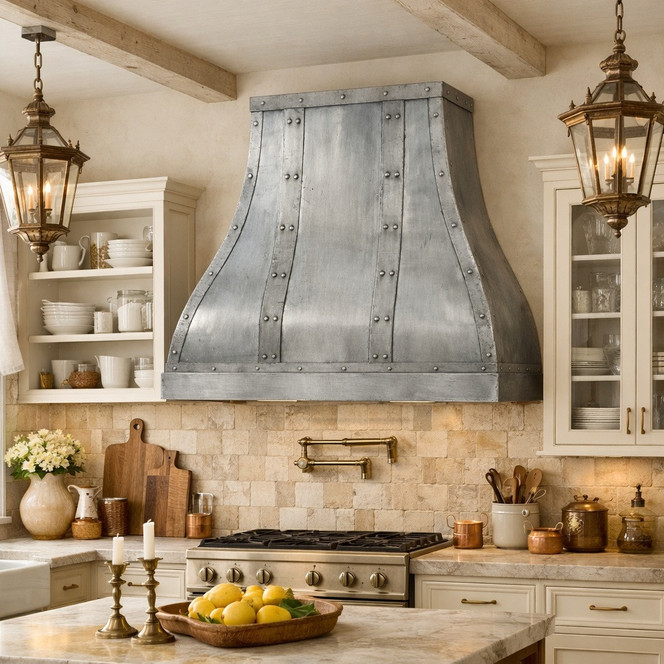
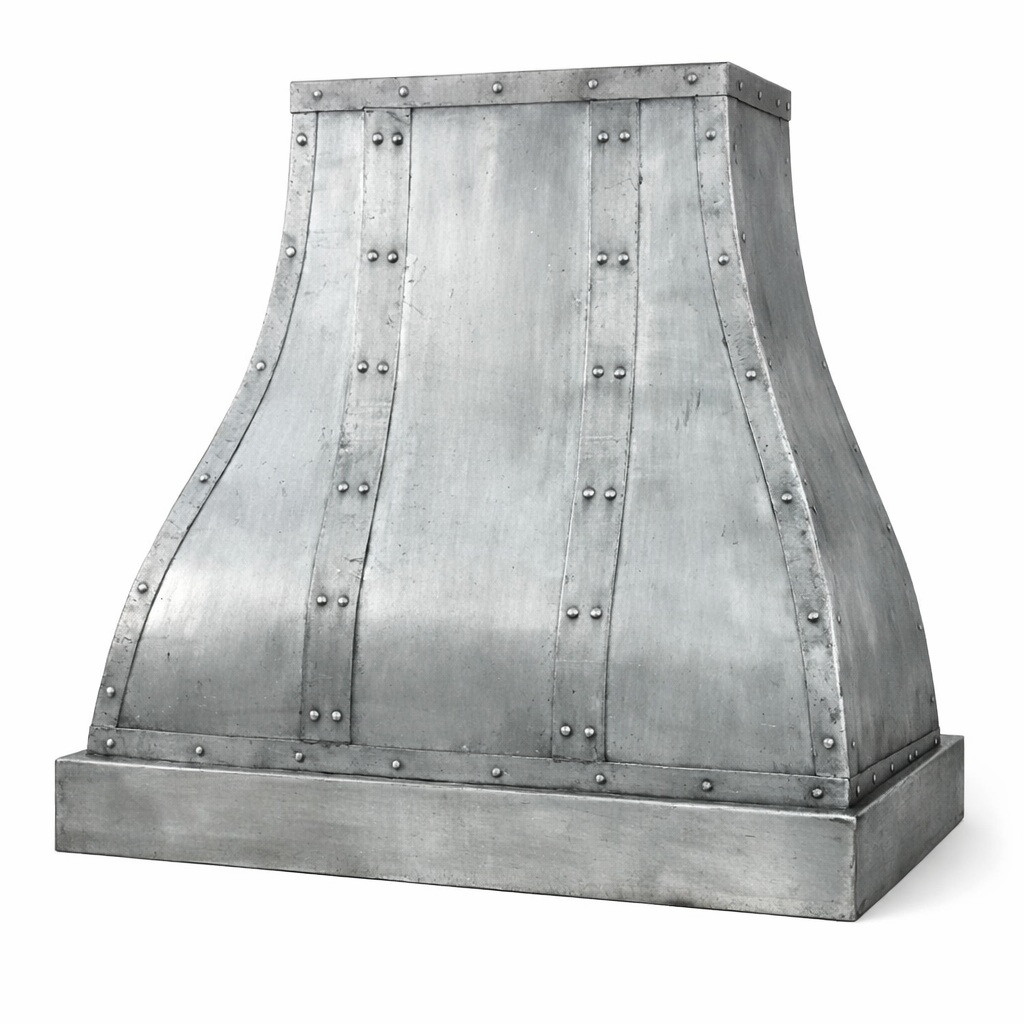
Brushed Zinc Range Hood with Vertical Straps and Crown Guide explains how a handcrafted zinc hood can bring soft gray metal tone, architectural strap detail, and refined custom character into transitional, farmhouse, rustic European, modern country, and mixed-metal kitchen interiors. This design uses a brushed zinc surface, vertical straps, rivet-style detailing, and a squared crown to create a balanced focal point above the cooking area. Its lighter zinc finish works well for kitchens that need metal character without the darkness of iron or the warmth of copper. Explore the brushed zinc range hood to review its shape, finish, custom sizing, strap details, and ventilation planning options.
Blog Summary
- Design: Brushed zinc hood
- Details: Vertical strap accents
- Shape: Crown top profile
- Style: Transitional to rustic
- Planning: Custom size and insert
Design Guide Overview
A brushed zinc range hood with vertical straps and a crown is designed for kitchens that need a refined metal focal point with visible handcrafted structure. The brushed zinc finish provides a soft gray surface that feels calmer than stainless steel and lighter than dark iron. Vertical straps add rhythm and definition, while the crown gives the top of the hood a more architectural finish. This combination works well in kitchens with shaker cabinetry, stone counters, wood flooring, muted tile, and carefully repeated metal accents. For broader material comparison, explore custom metal range hoods.
Brushed Zinc Finish
The brushed zinc finish gives the hood a quiet, directional surface character. Instead of a mirror-like shine, brushed zinc has a softened texture that reduces glare and creates subtle tonal movement. This makes it useful in kitchens that need metal detail without a cold appliance appearance. Zinc’s gray tone can coordinate with white, cream, greige, navy, green, natural wood, and charcoal cabinetry. The brushed surface also helps the hood feel handcrafted, especially when paired with straps and rivets. Compared with polished metal, brushed zinc feels more relaxed and more adaptable to lived-in residential kitchens. Browse kitchen inspiration in our brushed zinc range hood lifestyle image guide.
Finish Benefits
- Tone: Soft gray zinc
- Surface: Brushed metal texture
- Look: Refined and calm
- Style: Easy to coordinate
- Use: Fits neutral kitchens
Vertical Strap Detail
The vertical straps are one of the main design features of this zinc hood. They divide the surface into clean sections and create a stronger architectural presence above the range. Strap detailing gives the hood more depth than a plain smooth zinc shell, but it does not feel overly ornate. This makes the design useful for transitional kitchens where structure matters more than decoration. In rustic European or farmhouse kitchens, the straps can echo old metalwork, cabinet hardware, or forged lighting details. The result is a hood that feels tailored, handcrafted, and visually organized.
Crown Top Profile
The crown adds visual completion to the upper portion of the hood. Instead of ending with a simple flat top, the crown creates a more finished transition into cabinetry, ceiling space, or the hood’s upper chimney area. This detail is important because it gives the zinc hood a custom architectural look. The crown also balances the vertical straps by adding horizontal definition near the top. In kitchens with tall ceilings or open range walls, this feature helps the hood feel substantial. In tighter layouts, the crown should be proportioned carefully so it does not crowd nearby cabinets.
Crown Details
- Top: Adds finished profile
- Shape: Balances vertical straps
- Scale: Supports tall walls
- Style: Custom architectural look
- Fit: Plan cabinet clearance
Side View Importance
The side view is important because it shows how the hood projects from the wall and how the crown, body, lower apron, and straps relate in profile. A range hood is not only viewed from the front. In many kitchens, it is also seen from the side when entering the room, walking past the island, or viewing the range wall from nearby dining areas. The side profile should feel balanced, not bulky. This zinc hood’s controlled projection and shaped crown help it feel architectural without becoming too heavy for transitional or farmhouse cabinetry.
Zinc Hood Category
Zinc range hoods are often chosen by homeowners who want a softer metal tone than stainless steel and a cooler alternative to copper. Brushed zinc, smooth zinc, hammered zinc, and darker zinc patinas each create a different effect. Brushed zinc is especially useful when the kitchen needs texture, but not the stronger surface movement of hammering. Its neutral gray tone works well with many cabinet and backsplash colors. To compare additional shapes, straps, crowns, and patina options, browse the zinc range hoods collection.
Transitional Kitchen Use
In transitional kitchens, a brushed zinc hood can provide the right balance between classic and updated design. Shaker cabinets, simple stone counters, neutral backsplash tile, and restrained hardware all pair well with the brushed zinc surface. The straps add enough detail to keep the hood from looking plain, while the zinc tone keeps the room calm. This style is especially effective when the kitchen uses white, cream, warm gray, or muted blue cabinetry. The hood becomes a focal point, but it does not overpower the surrounding finishes or make the room feel overly rustic.
Transitional Pairings
- Cabinets: White or warm gray
- Counters: Marble or limestone
- Tile: Quiet backsplash
- Hardware: Nickel or bronze
- Wood: Warm floor tones
Farmhouse Kitchen Use
A brushed zinc hood with vertical straps can work beautifully in farmhouse kitchens because it adds handmade metal detail without the strong warmth of copper. The gray finish pairs well with painted shaker cabinetry, butcher block, soapstone, apron-front sinks, wood shelves, and simple ceramic accents. The crown and straps give the hood a custom feel, while the brushed surface keeps the design relaxed. In farmhouse interiors, zinc can be used to bridge rustic and refined elements. It looks especially balanced when repeated through cabinet hardware, lighting, pot fillers, or other cool-toned metal details.
Rustic European Style
Rustic European kitchens often use limestone, plaster, reclaimed wood, muted cabinetry, and aged metal details. A brushed zinc hood fits this environment because it feels old-world without becoming overly dark. The vertical straps can echo traditional metalwork, while the crown gives the upper body a built-in architectural quality. Zinc also pairs well with softer stone and plaster surfaces, allowing the room to feel collected and textural. Unlike polished stainless steel, brushed zinc does not feel overly commercial. It brings a quieter handcrafted quality that works well with antique-inspired interiors and natural materials.
Modern Country Kitchens
Modern country kitchens often need a focal point that feels warm, useful, and updated. This brushed zinc hood can provide that balance because its gray finish is calm, while the straps and crown add structure. Pair it with cream cabinetry, muted green cabinets, white oak floors, stone counters, handmade tile, and simple open shelves. The hood’s metal character gives the range wall a handcrafted center without making the kitchen feel heavy. For homeowners comparing softer zinc silhouettes, the smooth zinc bell hood guide offers another useful design reference.
Country Pairings
- Cabinets: Cream or muted green
- Wood: White oak or walnut
- Stone: Soft natural counters
- Tile: Handmade neutral tones
- Metal: Brushed gray accents
Mixed Metal Coordination
Brushed zinc is easy to coordinate with other metals because its gray tone is neutral. It can work with stainless steel appliances, black iron lighting, brass cabinet pulls, bronze accents, or pewter-toned hardware. The key is to keep one metal dominant and repeat secondary finishes intentionally. If zinc is the main range wall feature, other metals should appear in smaller details such as faucets, pendants, cabinet hardware, or stool frames. For kitchens combining zinc with brass, iron, copper, or steel, review mixed metal range hoods for design comparison.
Wall Installation Planning
A wall-mounted brushed zinc hood should align carefully with the cooking appliance below. The range, hood body, crown, backsplash, and surrounding cabinets should all feel centered and proportional. Width should relate to the cooktop or range, while depth should support ventilation capture without interfering with comfort. The crown needs enough clearance from nearby cabinetry, ceiling transitions, or trim. If the hood is surrounded by upper cabinets, confirm side spacing before production. A wall installation works best when the hood appears intentionally framed rather than squeezed between cabinets.
Island Installation Planning
An island version requires even more visual planning because the hood is seen from multiple sides. The crown, straps, and side profile must look balanced from the kitchen, dining area, and adjacent living space. Ceiling support and duct routing should be confirmed early because island hoods need secure overhead anchoring. The hood should provide enough capture area while preserving sightlines across the room. For a deeper look at how zinc hoods can be adapted to wall and island layouts, review the wall and island zinc hood guide.
Installation Checks
- Width: Match range scale
- Height: Fit ceiling space
- Depth: Plan capture area
- Duct: Confirm vent route
- Crown: Check clearance
Ventilation Insert Planning
The zinc shell creates the exterior design, but the insert provides the cooking performance. Before ordering, confirm the insert size, airflow needs, duct direction, filter access, lighting location, control access, and service requirements. Cooking habits matter because a high-output range or frequent frying may require stronger ventilation than light everyday cooking. The hood should be built around the chosen insert details so the shell and ventilation system work together. Rustica House can supply the 200 CFM insert only. Any other insert must be supplied by the buyer, with details provided before production.
Backsplash Coordination
The backsplash should support the brushed zinc finish without competing against the straps and crown. White tile, handmade ceramic, marble slab, limestone, plaster, brick, or muted patterned tile can all work depending on the kitchen style. Because the hood already has vertical metal detail, very busy tile may make the range wall feel crowded. In transitional kitchens, simple stone or quiet ceramic tile usually works best. In rustic European kitchens, plaster or limestone can create a softer aged effect. The goal is to let the zinc hood remain the primary architectural element above the range.
Backsplash Ideas
- Stone: Marble or limestone
- Tile: Soft handmade field
- Plaster: Rustic European mood
- Brick: Farmhouse texture
- Neutral: Keeps focus clear
Cabinet Coordination
Cabinet color strongly affects how brushed zinc appears. White cabinetry makes the zinc hood feel crisp and classic. Cream cabinetry warms the gray metal and softens contrast. Navy or green cabinetry gives the hood a more dramatic backdrop, while natural wood creates a relaxed organic look. The vertical straps help the hood stand out even when cabinet colors are quiet. Cabinet hardware should coordinate with the zinc or intentionally contrast with it. Brushed nickel, pewter, antique brass, bronze, and black iron can all work when repeated thoughtfully in lighting, pulls, faucets, or accessories.
Custom Sizing
Custom sizing is essential because a strapped zinc hood must look proportionate from the front and side. Width should relate to the range below and surrounding cabinets. Height should fit the wall or ceiling space without making the crown feel compressed. Depth should support ventilation capture while remaining comfortable for cooking. Strap placement should be balanced across the body, especially on wider hoods. The crown should be scaled to the hood, not added as an oversized detail. Reviewing other handcrafted metal hoods can help compare proportions before choosing final dimensions.
Custom Planning
- Width: Match appliance size
- Height: Fit wall space
- Depth: Support capture area
- Straps: Balance spacing
- Crown: Scale to hood size
Care and Cleaning
Brushed zinc should be cleaned gently to protect its surface character and natural finish. Use mild soap, warm water, and a soft cloth for regular cleaning. Avoid abrasive pads, harsh chemicals, acidic cleaners, and aggressive polishing compounds because they can alter the zinc surface. Dry the hood after wiping to reduce water marks. Because the finish is brushed, always clean in a gentle, consistent direction rather than scrubbing randomly. Natural zinc may develop subtle patina over time, and that aging should be treated as part of the material’s character rather than a defect.
Design Summary
A brushed zinc range hood with vertical straps and crown is ideal for kitchens that need quiet gray metal tone, handcrafted detail, and architectural structure. The brushed finish softens reflection, while the straps and crown create shape and depth. This hood works well in transitional, farmhouse, rustic European, modern country, and mixed-metal kitchens. It pairs with stone, plaster, handmade tile, painted cabinetry, wood floors, and carefully repeated hardware finishes. Proper custom sizing, insert planning, backsplash coordination, and gentle cleaning help the hood remain both functional and visually balanced over time.
Final Design Guidance
Brushed Zinc Range Hood with Vertical Straps and Crown Guide shows how finish, strap detail, crown shape, and kitchen planning work together. Choose this design when the room needs a softer alternative to stainless steel with more structure than a plain smooth hood. Pair it with quiet stone, painted cabinetry, warm wood, muted tile, and repeated metal accents. Confirm width, height, depth, crown clearance, installation type, and insert details before production. When planned carefully, this Rustica House zinc hood adds ventilation function, handcrafted character, and lasting architectural focus above the range.