 US Dollar
 Euro
Euro
 Australian Dollar
 Canadian Dollar
 Polish Zloty
 British Pound


Choosing the right bathroom faucet shapes comfort and style. A well-made bronze finish adds warmth and character. Explore our bronze bathroom faucets to see vintage silhouettes, artisan details, and durable builds. This guide explains styles, sizing, placement, and daily use. Use it to plan a cohesive bathroom upgrade. Use it to avoid common fit mistakes. Bronze can feel classic without feeling dated. It can also look bold in modern rooms.
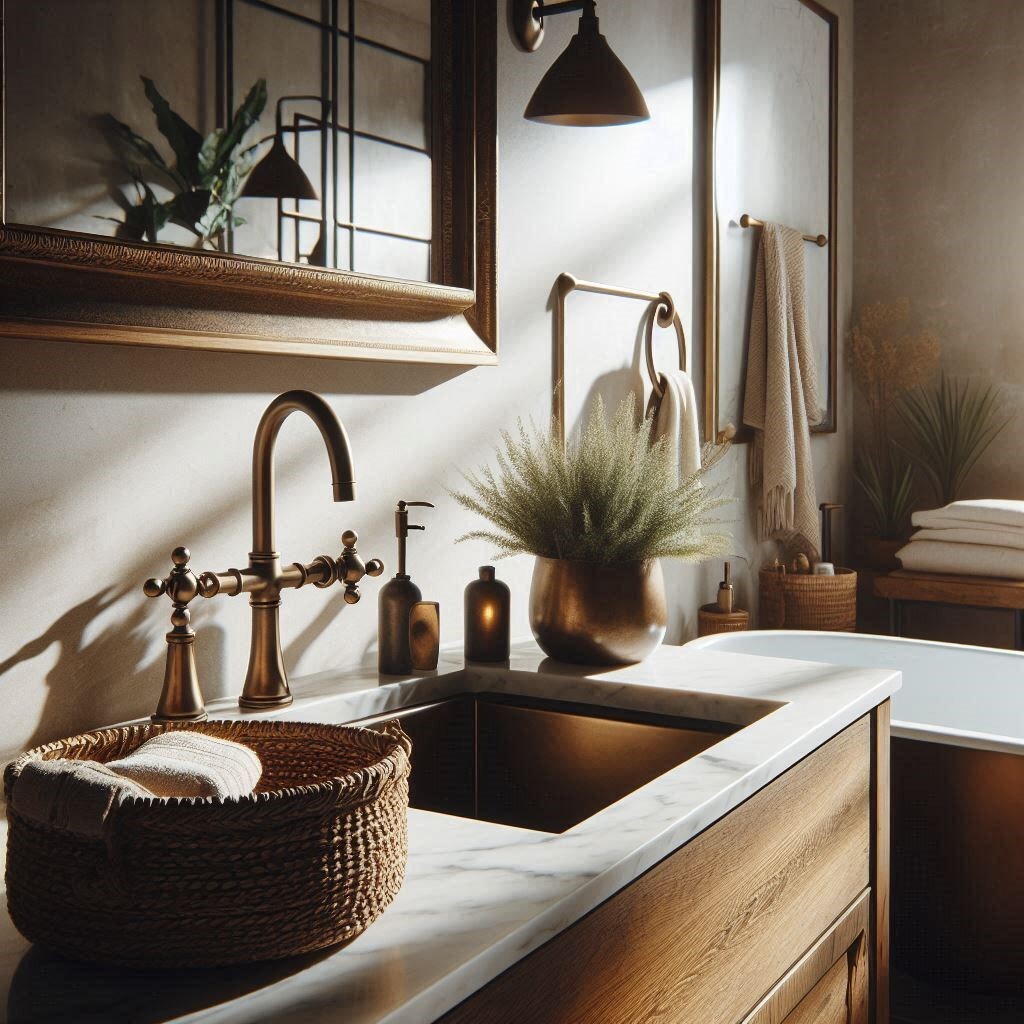
This image shows how bronze brings warmth to bright surfaces. It adds contrast without feeling harsh or industrial.
Why Bronze Works So Well in Bathrooms
Bathrooms rely on small details to feel finished. Bronze adds visual depth where chrome can feel cold. It also softens stone, tile, and bright painted walls. The finish reads inviting under warm lighting. It pairs naturally with wood vanities and plaster textures. It also complements copper, iron, and rustic ceramics. Many homeowners choose bronze for its lived-in character. It feels intentional in both vintage and updated spaces. Bronze faucets can become the room’s jewelry. They make simple bathrooms feel designed.
Start With the Faucet Type
Single-Hole Bathroom Faucets
Single-hole faucets suit clean and simple vanities. They work best on smaller sinks and compact counters. Installation is usually straightforward and efficient. The look stays minimal, with fewer parts visible. This style fits modern rustic bathrooms nicely. It also keeps the countertop easier to wipe. If your sink has one pre-drilled hole, choose this. If your sink has three holes, plan an escutcheon. Always confirm hole spacing before ordering.
Widespread Three-Piece Sets
Widespread sets feel more classic and architectural. They place handles farther from the spout. That spacing looks balanced on larger vanities. It also gives comfortable hand clearance. Many vintage bathrooms use this format. Bronze emphasizes the traditional “hardware” feel. You can align handles with mirror edges for symmetry. Confirm the sink or counter has three holes. Check the spread measurement before finalizing.
Centerset Faucets
Centerset faucets combine spout and handles on one base. They are common on standard vanity tops. They can be a practical choice for rentals. They can also look charming in small powder rooms. Bronze centersets add warmth without extra complexity. Measure the existing hole pattern to confirm compatibility. Many vanity tops use a four inch centerset pattern. If your top differs, choose another configuration. This avoids unwanted drilling or replacement costs.
Wall-Mounted Faucets
Wall-mounted faucets free up counter space. They look striking above vessel or trough sinks. They also make wiping the counter easier. However, installation needs careful planning. Spout reach must match your sink basin shape. The valve rough-in must align inside the wall. Choose this when walls are open during remodeling. If walls are finished, budget for extra labor. Done well, bronze wall mounts look timeless.
Finish Choices and What They Communicate
Bronze finishes vary from warm golden tones to darker browns. A lighter bronze brightens small bathrooms. It pairs well with white tile and pale stone. A darker bronze adds drama and contrast. It looks great with travertine and natural wood. Some bronze finishes have subtle rubbed highlights. Those highlights emphasize curves and carved details. Consider your lighting temperature before choosing. Warm bulbs enhance bronze depth and richness. Cool bulbs can flatten the finish appearance.
Matching Bronze to Your Sink and Vanity
Vessel Sinks
Vessel sinks sit higher than drop-in basins. They often need taller spouts for clearance. Bronze pairs especially well with Talavera vessels. It also complements carved stone basins. Confirm spout height and reach together. Water should land near the drain, not the rim. This reduces splash and keeps counters cleaner. If using a wall mount, verify spout projection. If using a deck mount, verify overall height.
Undermount and Drop-In Sinks
These sinks usually use standard faucet heights. They work well with single-hole or widespread sets. Bronze adds warmth to clean porcelain basins. It also softens sleek quartz counters. Confirm the deck thickness for mounting hardware. Some counters need longer shanks or extensions. Keep handle placement comfortable for daily use. Avoid handles too close to backsplash walls. Small spacing errors feel annoying over time.
Practical Sizing That Prevents Splash
The most common mistake is poor spout reach. Too short means water hits near the back wall. Too long means water hits too close to the front. Either one increases splash and mess. Aim for water to land near the drain center. Also consider aerator style and flow direction. A gentle stream feels quieter and cleaner. Stronger flow can splash in shallow basins. If kids use the sink, reduce aggressive flow. Correct sizing makes bronze feel luxurious every day.
Design Pairings That Look Intentional
Rustic and Hacienda Bathrooms
Bronze feels natural in rustic settings. Pair it with wood, stone, and textured plaster. Add iron accents to echo the bronze tone. Use warm lighting to highlight the finish. Consider a framed mirror with dark metal edges. Keep the palette earthy and calm. Bronze then reads like heritage hardware. It looks collected, not trendy. This style works well in guest baths too.
Mediterranean and Spanish Revival
Bronze works beautifully with patterned tile walls. It complements terracotta and cream surfaces. Choose curved spouts for a softer silhouette. Use handles with traditional lever shapes. Add a warm sconce near the mirror. The bronze will glow under that light. Avoid overly sharp modern faucet geometry here. Let the lines feel handcrafted and fluid. The result feels romantic and grounded.
Modern Rustic and Transitional
Bronze can still look fresh in modern bathrooms. Choose simpler handle shapes and clean spouts. Let the finish add warmth to minimal surfaces. Pair with white walls and natural wood vanities. Use stone counters for a calm, organic look. Keep accessories restrained and consistent. Bronze then feels like a deliberate accent. It softens the room without adding clutter. This approach works in small bathrooms well.
Installation Tips That Save Headaches
Confirm your hole pattern before you buy anything. Also confirm your sink thickness and counter material. For wall-mounted faucets, plan plumbing early. Confirm spout height above the basin rim. Leave enough clearance for handwashing. Confirm shutoff valve access inside the vanity. Use a licensed plumber for in-wall valves. Water leaks behind walls can be costly. If remodeling, install valves before tile work. Careful planning protects both tile and finishes.
Care and Maintenance for Bronze Finishes
Bronze is easy to maintain with gentle habits. Wipe water spots with a soft dry cloth. Clean with mild soap and warm water. Avoid abrasive pads and harsh cleaners. Those can dull or strip a protective finish. Keep acidic products away from the surface. If you use stone cleaners, rinse overspray quickly. For deeper cleaning, use a soft microfiber cloth. Consistent light care keeps the finish even. Bronze looks best when it ages gracefully, not harshly.
Choosing the Right Look for Your Bathroom
Start by naming the mood you want. Do you want refined, rustic, or romantic? Then choose a faucet silhouette that matches. Curved spouts feel classic and welcoming. Straighter spouts feel modern and tailored. Handle style matters as much as the spout. Lever handles feel simple and ergonomic. Cross handles feel vintage and decorative. Keep the faucet style aligned with your mirror and lights. Consistency is what makes bronze look “designed.”
Conclusion
Bronze bathroom faucets add warmth and lasting character. They work across rustic, transitional, and classic interiors. Choose the right type, reach, and finish for daily comfort. Plan installation details early to avoid rework. If you want more inspiration, explore rustic bathroom ideas and build a space that feels collected and timeless.