 US Dollar
 Euro
Euro
 Australian Dollar
 Canadian Dollar
 Polish Zloty
 British Pound

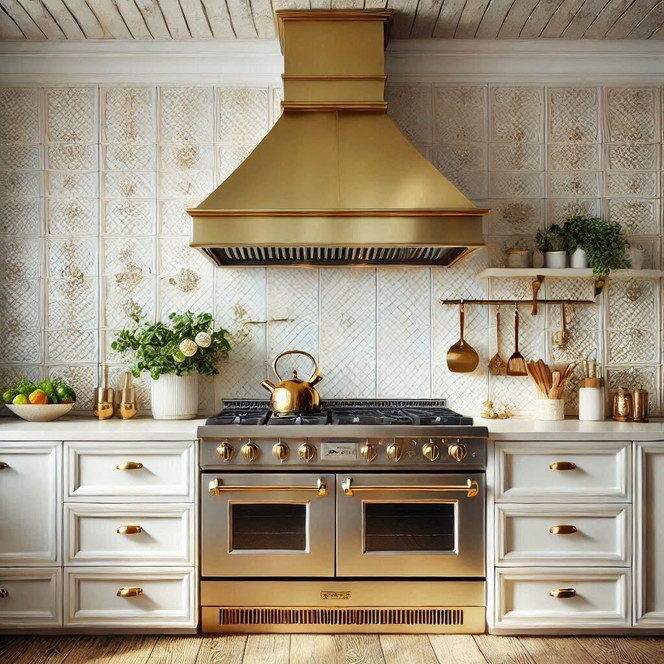
A brass range hood is both ventilation and visual anchor. Brass adds warmth, depth, and artisan character that elevates cabinets and stone. Because our pieces are handmade, no two are exactly the same. That natural variation is part of the rustic appeal. This buying guide explains how to choose the right size, plan for ceiling height, confirm safe clearances, and decide between hammered or smooth brass. You will also learn how to select our optional 200 CFM insert, or how to prepare the hood for your own insert with proper specifications. Start by browsing our brass range hoods to compare silhouettes and finishes.
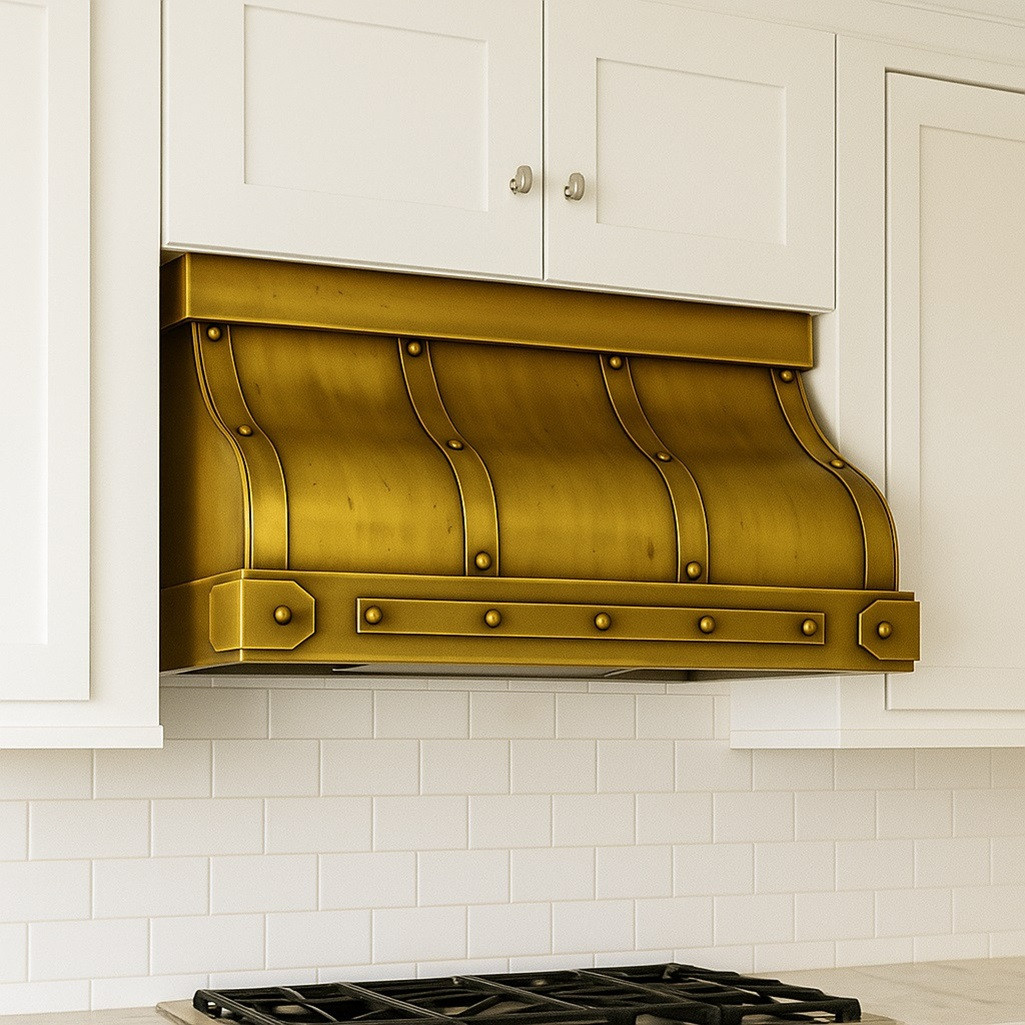
Why choose a handmade brass range hood
Brass brings a warm metal tone that feels richer than stainless steel. It pairs naturally with wood, stone, and painted cabinetry. Our brass range hoods are handcrafted with visible artisan cues, including hand-finished seams and subtle texture. Because each hood is made by hand, small variations in tone and surface are expected. That is what gives the hood a rustic, one-of-a-kind presence.
Start with hood width and cooktop size
Hood width should match the cooking surface first, then account for cooking style. A balanced hood looks centered and proportional. A properly sized hood also captures smoke and grease more effectively. Many buyers choose a hood that is the same width as the range, while others prefer a wider canopy for stronger capture when they cook often or use high heat.
Common width planning approach
As a baseline, match hood width to the range width. If you want extra capture, choose a hood that extends beyond the cooking surface. This is especially helpful for gas ranges, frequent frying, or open-plan kitchens where you want better containment. Always confirm cabinet constraints, crown molding, and side panels before finalizing width.
Choose hood height based on ceiling height and style
Hood height affects both the look and the performance. Taller ceilings can handle taller chimney sections or more vertical presence. Lower ceilings usually need a more compact build to maintain comfortable visual balance. The goal is a hood that feels intentional in the room, not crowded at the top or undersized above the range.
How to think about vertical proportion
Measure from the floor to the ceiling, then measure from the floor to the cooking surface. That gives you your available visual zone. In many kitchens, the hood becomes the main focal element, so the height should support your cabinet line and your backsplash height. If you have upper cabinets, the hood usually aligns with the cabinet tops for a clean, built-in look.
Plan safe distance between the range and the hood
Clearance is critical for safety and comfort. The hood must sit high enough to protect you from head bumps and heat exposure, but low enough to capture smoke efficiently. Your insert manufacturer may also require a specific mounting range, so it is important to follow the insert guidelines if you are supplying your own unit.
Typical clearance ranges to plan around
Many kitchen setups land in a practical clearance range that balances capture and usability. Gas ranges often benefit from slightly more clearance than electric, depending on your cooking style and the insert you select. Always confirm the final clearance using your insert instructions and local code requirements, since rules can vary by area.
Hammered brass vs smooth brass: how to choose
The surface texture changes the entire feel of the hood. Hammered brass adds movement and artisan texture that hides fingerprints and softens reflections. Smooth brass feels cleaner and more tailored, with a calmer sheen that works well in refined spaces. Both finishes keep the warmth of brass, but they support different visual moods.
When hammered brass is the better choice
Choose hammered brass when you want rustic depth and a handcrafted look that holds up visually in busy kitchens. Hammering pairs beautifully with natural stone, wood beams, brick, and handmade tile. It is also a great option when you want a hood that feels less formal and more artisanal.
When smooth brass is the better choice
Choose smooth brass when you want a cleaner focal point with minimal texture. Smooth brass pairs well with flat-panel cabinetry, modern classic kitchens, and spaces where the backsplash already has strong pattern. It also works well when you want the hood silhouette to be the main statement, not the surface texture.
Ventilation options: our 200 CFM insert or your own insert
Insert planning should happen early. The insert determines the interior clearances, the duct connection, and the mounting method. We offer a 200 CFM optional insert with light and filters for smaller hoods and lighter cooking needs. This option is useful for kitchens that need basic ventilation without high airflow demands.
When the 200 CFM optional insert makes sense
Our 200 CFM insert works well for smaller hood sizes and everyday cooking in compact kitchens. It includes light and filters, which simplifies the setup. It is a practical solution when you want a ready-to-use hood without sourcing a separate blower or insert.
How to prepare the hood for the buyer’s own insert
If you are using your own insert, we need specific information to build the hood correctly. We must know the insert brand and model number. We also need the insert diagram with measurements, so we can confirm fit, mounting points, and internal clearance. Without the diagram, you risk gaps, interference, or improper alignment during installation.
Installation planning tips that prevent problems
Good planning reduces install risk and helps the hood look cleaner on the wall. Confirm studs, blocking, and duct path early, especially if the duct must pass through framing. Confirm where the electrical feed will land for lights and blower. If you have upper cabinets, confirm that the hood proportions align with cabinet height and trim details.
Six best kitchen designs for handmade brass range hoods
- Transitional kitchens with mixed warm metals
- Modern classic kitchens with calm stone
- French country kitchens with soft neutrals
- Mediterranean kitchens with artisan tile
- Rustic farmhouse kitchens with wood beams
- Industrial loft kitchens needing warm contrast
How to keep brass looking its best
Brass is a living metal that can develop tone shifts over time. Routine care is simple. Use mild soap, warm water, and a soft cloth, then dry fully. Avoid abrasive pads and harsh chemicals, which can scratch or dull the finish. If you prefer a more consistent look, handle splatters quickly and keep the surface dry after cleaning.
Conclusion
A handmade brass range hood from Rustica House brings warmth, texture, and artisan character to kitchens that need a strong focal point. Start by sizing the hood to your cooking surface, then confirm ceiling height and clearances for safe, effective capture. Decide between hammered and smooth brass based on the level of texture you want, and plan your insert early, whether you choose our 200 CFM option or supply your own unit with full specs and diagrams.
Explore more styles in our metal range hood collection, find replacement options in range hood spare parts, or view current deals in range hoods on sale.