 US Dollar
 Euro
Euro
 Australian Dollar
 Canadian Dollar
 Polish Zloty
 British Pound

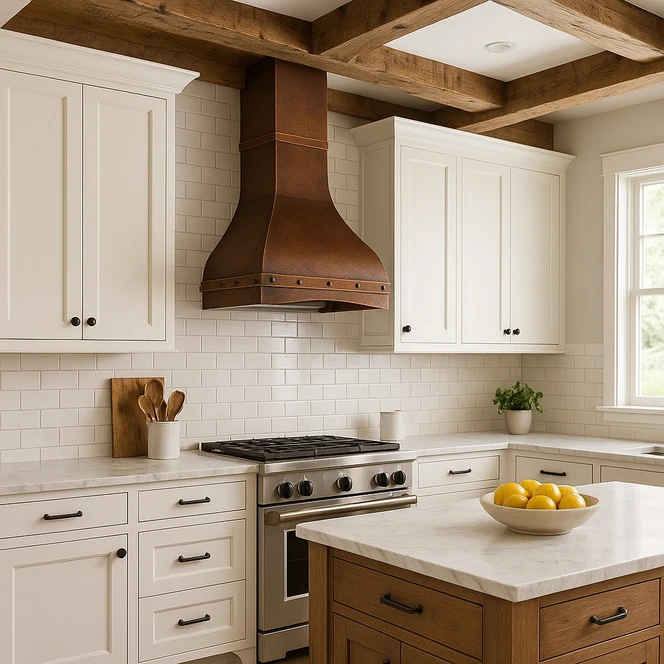
Bell Country Copper Range Hood Buying Guide helps homeowners choose the right size, finish, mounting style, and ventilation setup for a warm farmhouse kitchen focal point. This bell shaped copper hood combines a flared canopy, hammered metal texture, riveted straps, and country inspired character for rustic, traditional, transitional, Mediterranean, and farmhouse interiors. Its rounded profile softens the range wall while the vertical strap detail adds structure and artisan rhythm. Explore the bell country copper hood before planning your kitchen design. See kitchen inspiration in our bell copper hood gallery.
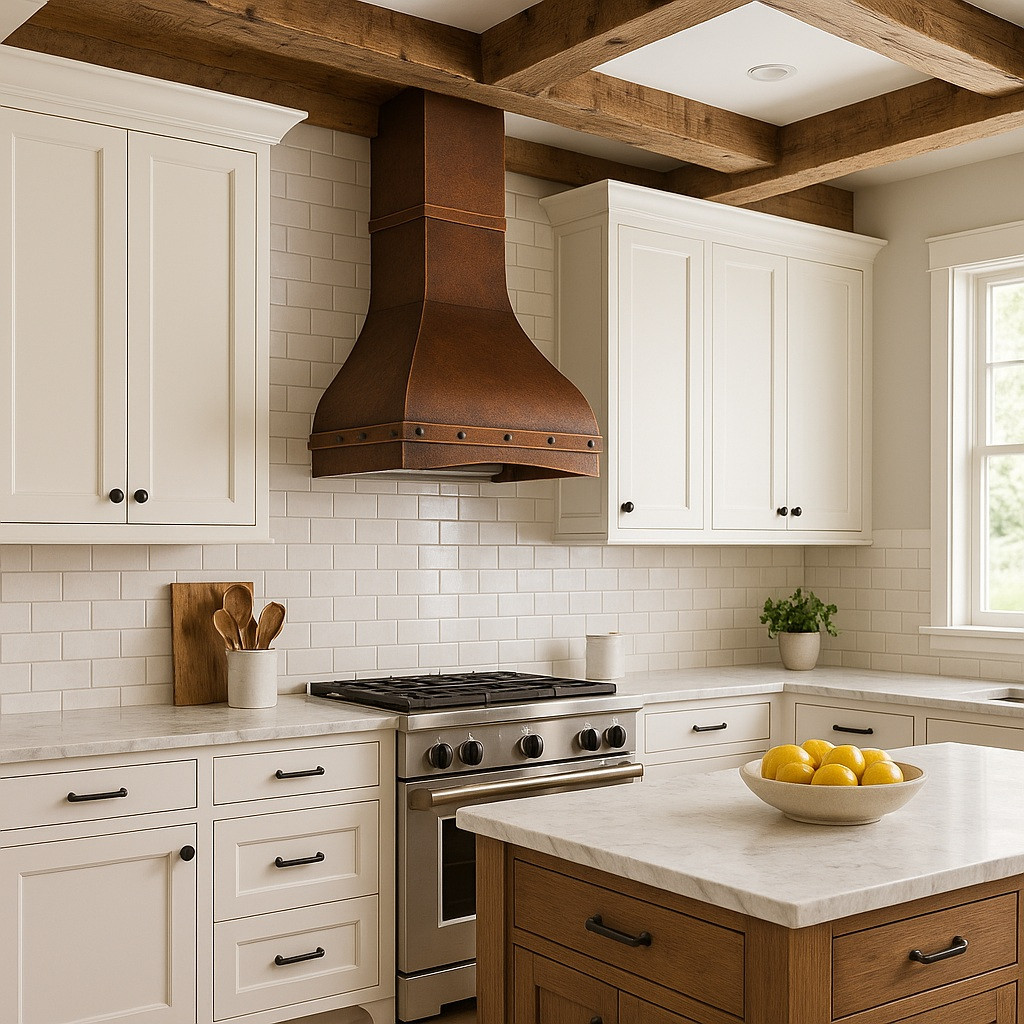
Bell Hood Character
A bell shaped copper range hood creates a softer and more sculptural presence than a straight box or pyramidal hood. The curved lower body draws attention to the range wall while keeping the design approachable and warm. This shape works especially well in farmhouse kitchens because it feels traditional without looking overly formal. The copper finish adds natural warmth, while the hammered surface gives the hood visible artisan character. Riveted straps add vertical structure, helping the curved body feel grounded and architectural. The result is a range hood that feels decorative, functional, and visually connected to rustic kitchen materials.
Country Kitchen Appeal
Country kitchens often depend on warmth, comfort, and materials that feel authentic. A bell country copper hood supports that look because it pairs naturally with wood cabinetry, brick backsplashes, plaster walls, apron front sinks, stone counters, open shelves, and iron lighting. The copper finish becomes a warm focal point above the stove, while the curved bell form keeps the cooking wall from feeling too rigid. For more visual inspiration and shape planning, review our bell copper hood guide before choosing the final size and finish.
Best Style Matches
- Rustic farmhouse kitchens
- Country cooking spaces
- Traditional kitchen walls
- Mediterranean interiors
- Transitional rustic homes
Choosing the Size
Size affects both the appearance and performance of a copper range hood. A hood that is too narrow can look weak above the stove and may not capture cooking steam effectively. A hood that is too wide can dominate the wall or crowd surrounding cabinetry. Start by measuring the range or cooktop, then check available wall width, ceiling height, cabinet spacing, and backsplash area. A country style bell hood usually looks best when it feels slightly generous above the cooking surface, especially in open kitchens where the range wall is visible from nearby dining or living areas.
Width and Proportion
The bell shape needs enough width to show its curved form clearly. On a small wall, a compact hood can still create a strong focal point if the proportions are balanced. On a larger wall, the hood may need more width or chimney height to avoid looking undersized. The vertical straps help organize the copper surface, but the body should still relate to the stove below it. When planning width, consider both ventilation capture and visual symmetry. The hood should feel centered, stable, and proportionate to cabinets, tile, counters, and the cooking appliance.
Size Planning Checks
- Measure cooktop width
- Check cabinet spacing
- Review ceiling height
- Plan chimney length
- Allow capture width
Wall Mount Placement
This type of copper hood is especially effective as a wall mounted feature above a stove or range. A wall mount installation allows the bell shape, front apron, straps, and copper finish to become the main visual feature of the cooking wall. The hood can be framed by cabinetry, brick, stone, handmade tile, plaster, or open shelving. Before ordering, confirm wall support, duct route, mounting height, and insert requirements. The hood should align with the cooktop centerline and leave enough clearance for safe cooking, comfortable visibility, and proper ventilation performance.
Strap and Rivet Details
Riveted straps change the entire personality of the hood. They bring vertical rhythm to the curved copper body and prevent the surface from feeling plain. The rivets suggest hand assembly and old world metalwork, while the straps add contrast and visual structure. In a country kitchen, this detail pairs well with black cabinet pulls, wrought iron lighting, rustic hinges, pot racks, and dark metal seating. Straps are especially useful when the kitchen combines soft materials with stronger architectural accents. They give the hood enough detail to stand out without needing heavy ornament or complicated decorative patterns.
Strap Design Benefits
- Adds vertical rhythm
- Frames the copper body
- Supports rustic style
- Pairs with iron hardware
- Adds artisan structure
Copper Finish Options
Finish selection has a major impact on the final kitchen mood. A natural copper tone feels warm and brighter, while coffee or antique finishes create deeper rustic character. Honey patina brings golden warmth, and darker tones work well with light walls, white cabinets, plaster, and stone. Hammered texture adds movement by catching light across the curved surface. Smooth copper would feel cleaner, but hammered copper often suits country interiors because it shows the hand of the artisan more clearly. Compare the finish with flooring, backsplash, cabinet color, lighting, and hardware before making the final selection.
Backsplash Pairings
The backsplash should support the bell copper hood rather than compete with it. Brick is a natural choice for farmhouse and country kitchens because it repeats warmth and texture. Natural stone gives the hood an Old World background, while handmade white tile creates contrast and brightness. Plaster walls can make the copper surface feel even richer. Patterned tile can also work, but it should be chosen carefully so the straps, rivets, and bell shape remain visible. The best backsplash lets the hood act as the focal point while adding enough texture to complete the range wall.
Backsplash Ideas
- Rustic brick wall
- Natural stone tile
- Handmade white tile
- Warm plaster finish
- Soft patterned ceramic
Ventilation Planning
A decorative copper hood still needs the right ventilation insert. The insert handles smoke, steam, grease, odors, lighting, fan speeds, and filter access. Before ordering, decide whether the kitchen needs ducted ventilation or a ductless recirculating setup. Ducted systems move air outside, while ductless systems filter and return air into the room. Cooking intensity also matters. Frequent high heat cooking may require stronger airflow than light daily cooking. The insert should be selected early so the custom copper body can be prepared for the correct dimensions, controls, filters, and service access.
Material Coordination
The bell country copper hood looks best when at least one related material appears elsewhere in the kitchen. Copper can be repeated through a sink, cookware, light fixture, cabinet accent, or warm decorative detail. The strap color can connect with iron hardware, black windows, dark lighting, or bar stools. Wood cabinetry and open shelving bring softness, while stone counters and brick walls reinforce rustic texture. For more copper shapes and finish options, browse custom copper range hoods to compare related kitchen designs.
Comparing Metal Hoods
Although copper is ideal for warm country kitchens, it is helpful to compare it with other metal hood materials before ordering. Zinc creates a cooler gray tone, iron gives the kitchen a darker architectural look, and mixed metal hoods add contrast with straps, trim, or rivets. Copper remains one of the strongest choices when the goal is warmth, patina movement, and rustic artisan appeal. If the kitchen design is still open, explore custom metal range hoods to compare copper, zinc, iron, tin, brass, and mixed metal options.
Material Comparisons
- Copper feels warm
- Zinc feels softer gray
- Iron adds dark structure
- Tin feels decorative
- Mixed metal adds contrast
Care and Maintenance
Copper hoods should be cleaned gently to preserve the patina and texture. Use mild soap, water, and a soft cloth for routine cleaning. Avoid abrasive pads, acidic cleaners, harsh chemicals, and rough scrubbing because they can damage or unevenly change the finish. Grease should be wiped from the hood and nearby backsplash regularly, especially around the underside and filter area. If the hood has a ventilation insert, filters should be cleaned or replaced according to the insert instructions. With consistent care, the copper surface can remain rich while still developing natural character over time.
Care Guidelines
- Use mild soap only
- Avoid harsh cleaners
- Dry with soft cloth
- Clean filters often
- Protect copper patina
Buying Guide Summary
When buying a bell country copper range hood, begin with the stove width, wall space, and ceiling height. Choose a hood size that feels balanced and provides proper capture above the cooking surface. Decide whether the hammered finish, strap layout, and patina tone fit the surrounding kitchen materials. Plan the ventilation insert early so the hood body can be built around the correct mechanical system. Consider brick, stone, plaster, or handmade tile as backsplash options. The goal is to create a range wall where the copper hood feels intentional, functional, and visually connected to the full kitchen design.
Final Design Guidance
Bell Country Copper Range Hood Buying Guide shows how shape, size, finish, straps, backsplash material, and ventilation planning work together. This hood style is ideal for kitchens that need farmhouse warmth, artisan copper texture, and a softer curved focal point above the stove. The bell shape adds movement, while riveted straps provide structure and handcrafted detail. When paired with wood, brick, stone, plaster, iron, and warm cabinetry, the hood becomes more than a ventilation cover. It becomes the central feature of a rustic country kitchen.