 US Dollar
 Euro
Euro
 Australian Dollar
 Canadian Dollar
 Polish Zloty
 British Pound

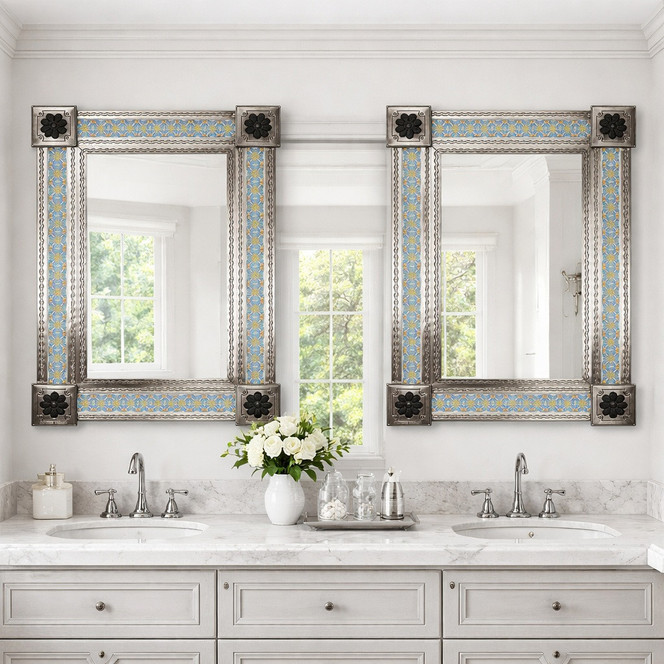
In Puebla, Mexico, where colonial architecture, painted tile, and hand-worked metal traditions remain part of everyday visual culture, artisan Ana López creates handmade tin tile mirrors, with a style rooted in Mexican craft. Her work combines embossed tin frames, decorative metal patterns, and colorful Talavera-inspired tile accents to produce mirrors that feel architectural, festive, and deeply handmade. Each piece reflects a balance between function and ornament. The mirror is practical, but the frame becomes the true artwork, shaped through patient metalworking and finished with tile patterns that bring color, rhythm, and regional character into the home.
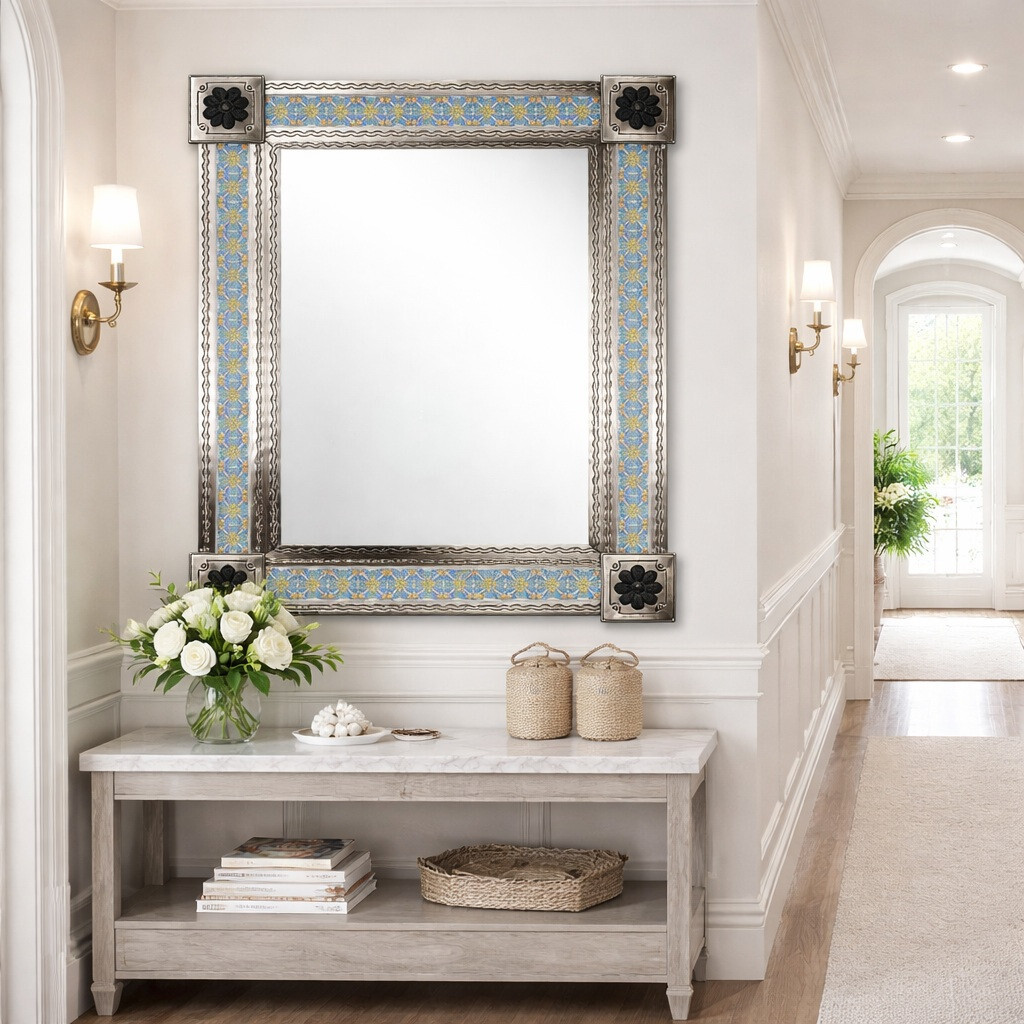
Ana’s mirrors are part of a long decorative tradition in central Mexico, where metal frames, punched details, and painted ceramics have been used to enrich interiors for generations. Her work celebrates this heritage through pieces available in several forms, including hexagonal tin mirrors, Mexican octagonal mirrors, Mexican arch mirrors, and Mexican rectangular mirrors. Together, these shapes offer different ways to introduce Mexican artisan detail into bathrooms, entryways, bedrooms, powder rooms, hallways, restaurants, hotels, and hacienda-style interiors.
Artisan Roots in Puebla
Puebla is widely recognized for its decorative tile identity, especially the use of glazed ceramic patterns in churches, courtyards, kitchens, fountains, and historic building facades. For an artisan like Ana López, that environment provides constant inspiration. The colors, borders, floral motifs, geometric divisions, and hand-painted surfaces found throughout the region influence the way she thinks about mirror design. Instead of treating the mirror as a plain household object, she approaches it as a framed composition, where tin and tile work together to create depth, movement, and personality.
Her workshop practice begins with an understanding of proportion. Before the metal is cut or embossed, Ana studies the mirror shape and decides how the frame should support it visually. A rectangular mirror needs strong vertical balance. An arched mirror asks for softer movement at the top. A hexagonal or octagonal frame requires careful symmetry, because each angled side must relate to the next. This planning gives her work a structured quality, even when the surface decoration feels lively and spontaneous.
The Handmade Tin Process
Handmade tin mirrors require more than assembling a frame around glass. The work involves shaping, cutting, pressing, punching, and finishing thin metal sheets so they gain texture and ornamental value. Ana uses traditional decorative techniques to create raised borders, floral medallions, rope-like trims, ribbed accents, scalloped edges, and stamped details. These patterns catch light differently across the surface, giving the frame a dimensional quality that changes as the viewer moves through the room.
The tin surface is especially important because it provides contrast with the colorful tile inserts. Dark brown, antique silver, aged bronze, or warm rustic finishes can make bright Talavera-style tiles stand out more clearly. A frame with a darker finish may feel formal and architectural, while a brighter tin finish can make the mirror appear lighter and more festive. Ana chooses finishes that support the tile colors rather than overpower them. The goal is harmony between metalwork and painted ceramic detail.
Tile placement is another essential part of her craft. On some designs, tiles form a continuous border around the mirror. On others, they appear as accents at corners, top points, or side sections. The repeated tile pattern creates rhythm, while the tin frame gives the mirror structure. This combination allows Ana’s pieces to work in colorful Mexican interiors as well as more restrained rustic spaces where one artisan detail becomes the focal point.
Mexican Tile Mirrors
The broader collection of Mexican tile mirrors shows the full strength of this craft tradition. These mirrors often combine punched tin borders with Talavera-inspired ceramic tiles in floral, geometric, star, pinwheel, and scroll designs. The result is a decorative wall piece that can brighten a bathroom, frame a vanity, or bring color to an entryway. Because tile patterns vary widely, each mirror can express a different mood. Some feel cheerful and folk-inspired, while others feel more formal, colonial, or Mediterranean.
Ana’s approach to Mexican tile mirrors is guided by balance. Too much metalwork can make the frame feel heavy. Too much color can compete with the mirror glass. Her best designs use the tin as an architectural outline and the tile as a decorative voice. In rustic bathrooms, these mirrors pair beautifully with Talavera sinks, hammered copper fixtures, wood vanities, and plaster walls. In hallways or dining rooms, they bring a handcrafted accent that feels both useful and artistic.
Mirror Shapes by Ana López
Hexagonal Tin Mirrors
Hexagonal mirrors are especially interesting because their six-sided shape creates a clean geometric outline while still feeling handmade. Ana often uses the hexagon to build a strong central composition. Each side of the frame becomes part of a repeating rhythm, making the mirror suitable for spaces where symmetry matters. The shape feels decorative without being overly ornate, which makes it useful in transitional interiors that mix rustic and contemporary elements.
A hexagonal tin mirror can work well above a small vanity, between wall sconces, or as a decorative accent in an entry niche. When tile inserts are added, the angled frame gains even more personality. Floral tiles soften the geometry, while blue and white patterns give the mirror a classic Mexican look. For Ana, this shape offers a chance to blend mathematical structure with hand-finished detail.
Octagonal Mexican Mirrors
Octagonal mirrors carry a more architectural feeling. With eight sides, the frame has a strong presence, often resembling a window, medallion, or colonial wall ornament. Ana uses this shape to create mirrors that feel substantial and ceremonial. The angled corners offer space for decorative tin medallions, embossed flowers, or tile accents that make the frame look highly detailed without losing order.
The Mexican octagonal mirror style is especially effective in Spanish Revival bathrooms, hacienda entryways, boutique hotel interiors, and colorful restaurant spaces. The shape creates immediate visual interest, while the combination of tin and tile reinforces its handmade character. Ana’s octagonal pieces often feel like they belong in historic interiors, yet they can also bring warmth to newer homes that need a distinctive artisan element.
Mexican Arch Mirrors
Arched mirrors are among the most expressive forms in Mexican decorative design. The curved top recalls colonial doors, church windows, courtyard openings, and mission-style architecture. Ana’s arched tin tile mirrors often use the upper curve as the main decorative feature, adding raised tin details, floral cresting, or tile accents that emphasize height. This makes the mirror feel graceful and slightly formal.
A Mexican arch mirror works beautifully above a bathroom vanity, console table, fireplace mantel, or hallway cabinet. The arched silhouette softens straight walls and adds a sense of vertical elegance. When paired with Talavera tile, the frame becomes even more expressive. The tile brings color, while the arch brings architectural memory. Ana’s arched mirrors show how a simple reflective surface can become a tribute to Mexican building traditions.
Rectangular Tin Tile Mirrors
Rectangular mirrors remain the most versatile shape, and Ana treats them with special attention to proportion. A Mexican rectangular mirror can be used in bathrooms, bedrooms, dressing areas, hallways, and commercial interiors. Because the shape is familiar, the artisan detail becomes even more important. Embossed tin borders, tile corners, punched floral patterns, and raised trims transform the rectangle from ordinary to memorable.
In bathroom design, rectangular tin tile mirrors are especially practical. They provide generous reflection while adding handmade texture above a sink or vanity. In rustic interiors, they pair well with copper sinks, stone counters, carved wood cabinets, and hand-painted wall tiles. Ana often uses the long frame sides to create repeating decorative movement, while the corners carry accent details that finish the composition. The result is balanced, useful, and visually rich.
Why Tin and Tile Work Together
The strength of Ana López’s work comes from the way tin and tile complement each other. Tin offers shine, texture, and sculptural relief. Tile offers color, pattern, and glazed surface. One material reflects light in soft metallic ways, while the other introduces painted rhythm. Together, they create a mirror frame that feels layered and alive.
This pairing also makes the mirrors highly adaptable. A design with cobalt blue and white tile may suit Mediterranean interiors. A frame with yellow, green, orange, and blue floral tiles may feel perfect for a Mexican bathroom or hacienda-style powder room. A darker tin frame with restrained tile accents can work in Spanish Colonial or rustic lodge settings. Ana’s craft gives homeowners and designers options without losing authenticity.
Decorating with Handmade Mirrors
Handmade tin tile mirrors can be used as focal points or supporting accents. In a bathroom, one mirror above a vanity can define the entire room. In an entryway, a mirror with bright tile creates a welcoming first impression. In a hallway, several smaller mirrors can add rhythm and reflected light. In a restaurant, hotel, or boutique space, these mirrors help establish a regional design story without requiring large architectural changes.
To decorate successfully with Ana’s mirror style, it helps to repeat one or two materials elsewhere in the room. A tin mirror can be paired with iron lighting, copper sinks, hand-painted tiles, carved wood, cantera stone, or rustic plaster. The mirror does not need to match everything exactly. It should feel connected through color, texture, or cultural influence. This is where handmade pieces excel, because their slight variations make interiors feel collected rather than manufactured.
Ana López and Handmade Value
Ana López’s mirrors remind us that handmade objects carry time, judgment, and personal touch. Every embossed border, tile placement, punched pattern, and finish choice reflects the artisan’s eye. Unlike mass-produced mirrors, these pieces show the small variations that make handcrafted work meaningful. The frame may have subtle marks from shaping. The tile may show slight glaze variation. The metal finish may shift gently across raised and recessed areas. These qualities are not defects. They are evidence of the process.
For homeowners, designers, and collectors, Ana’s work offers more than decoration. It offers a connection to Mexican craft, especially the visual language of Puebla and the broader tradition of combining metalwork with ceramic color. Her mirrors bring history into daily use. They are seen while washing hands, preparing for the day, welcoming guests, or passing through a hallway. In that way, the craft becomes part of everyday life.
Conclusion
Mexican artisan Ana López brings together tinwork, tile, proportion, and regional inspiration to create handmade mirrors with lasting decorative value. From colorful Mexican tile mirrors to hexagonal, octagonal, arched, and rectangular designs, her work shows how a functional household object can become a piece of artisan architecture. Each mirror reflects Puebla’s decorative spirit through metal texture, ceramic color, and hand-shaped detail.
Whether used in a rustic bathroom, Spanish Revival entryway, Southwestern hallway, boutique hotel, or hacienda-style restaurant, Ana’s handmade tin tile mirrors add warmth, culture, and visual identity. They are not only mirrors for reflection. They are mirrors of Mexican craft itself, shaped by hand and finished with the kind of detail that makes every piece feel personal.