 US Dollar
 Euro
Euro
 Australian Dollar
 Canadian Dollar
 Polish Zloty
 British Pound


Freestanding & Clawfoot Copper Bathtubs
Posted by Rustica House on December 18, 2017 — Updated May 1, 2025
Freestanding tubs invite relaxation by becoming the undisputed focal point of any bathroom. Among them, hand-hammered copper models elevate self-care into an art form: their living patina evolves, their heat retention is legendary, and their silhouettes echo centuries of artisan heritage. If you are comparing soaking styles, the classic clawfoot base offers an unmistakable touch of Old-World romance while allowing full exposure of a tub’s sculptural exterior. Throughout this guide we will explore what sets Rustica House designs apart, how to select the right size, and how to maintain your investment for decades of indulgent baths. Looking for an equally eye-catching contemporary alternative? Our freestanding double slipper hammered copper tub delivers the same artisanal quality in a sleek, footless silhouette. For a deeper dive into specifications, see our copper bathtub buying guide.
The Allure of Freestanding Copper Baths
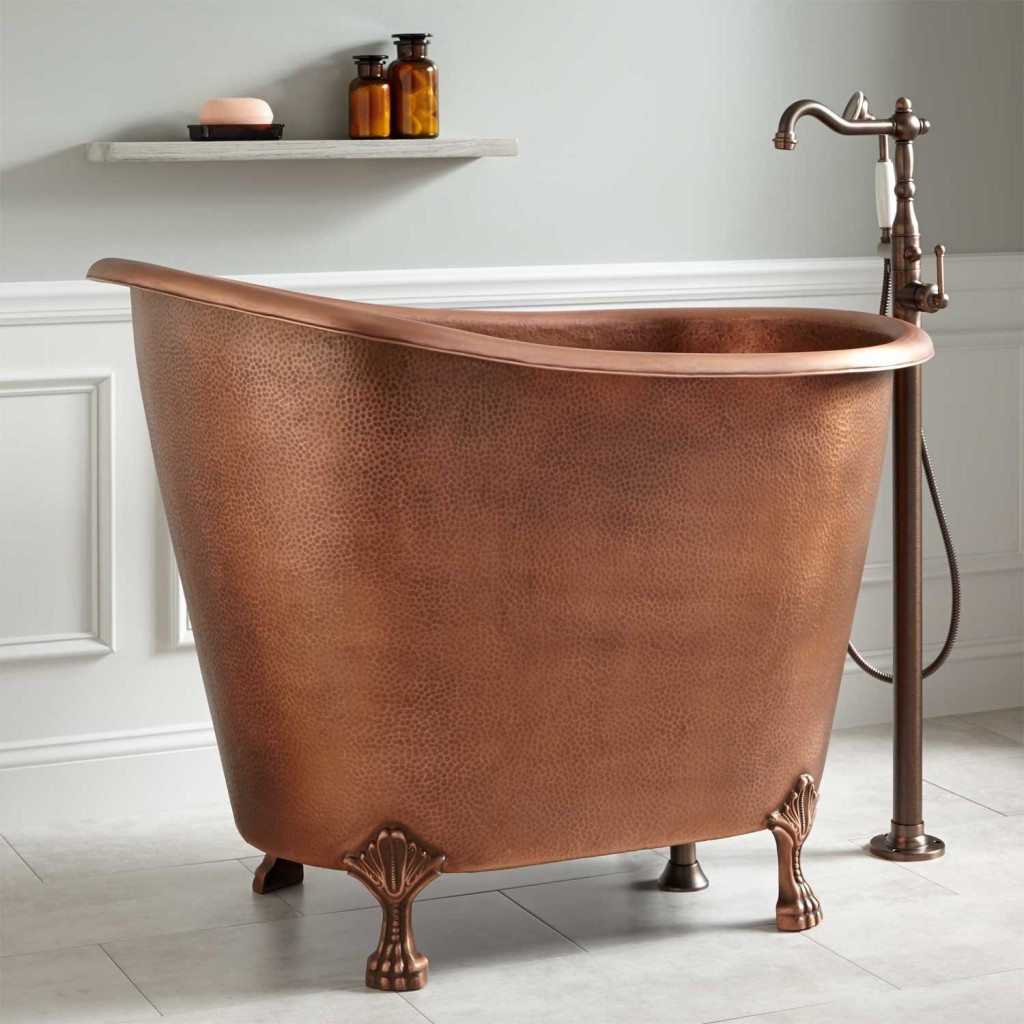
A freestanding bathtub changes the way a room is experienced: suddenly the bathing ritual becomes central, ceremonial, and beautifully exposed. Copper intensifies that statement through its warm glow and subtle hammer marks that catch ambient light. Unlike built-in tubs that must be framed by walls, a freestanding copper vessel can stand confidently beneath a chandelier, in front of a picture window, or on a diagonal that harmonizes with existing architectural lines. Because the entire exterior is visible, artisans at Rustica House pay meticulous attention to every panel joint and rolled rim. They use 14- or 16-gauge recycled copper sheets—thicker than industry norms—to create a shell that feels substantial when you tap it. Over time, the metal’s surface oxidizes into deeper russet and umber tones, meaning the bath you unwrap will never look identical to the bath you enjoy years later. That living finish is precisely what collectors value: a copper tub ages with its owners, telling a story of steamy nights, lavender soaks, and candle-lit memories. Discover more in our benefits of hammered copper bathtubs.
Clawfoot Heritage and Contemporary Revival
The clawfoot form dates to the early eighteenth century, inspired by Chinese stone carvings of lions clutching pearls. European cabinetmakers adopted the motif for furniture legs, and by the Victorian era cast-iron tubs balanced gracefully on taloned feet became status symbols. Today, Rustica House reinterprets that lineage by casting each base from solid bronze, then hand-welding it to the hammered copper shell. The result merges two noble metals into a stable platform that lifts the basin just high enough to create dramatic negative space beneath. That clearance simplifies cleaning, improves heat circulation around the vessel, and visually lightens even a 72-inch tub in a modest ensuite. Contemporary designers love pairing a copper clawfoot bath with matte-black fixtures, slimline ceramic tiles, or raw concrete floors—the contrast between refined curves and modern backdrops produces a curated, boutique-hotel vibe. Yet the piece remains faithful to tradition, ensuring that homeowners who favor period interiors or farmhouse chic can style it with beadboard wainscoting and vintage brass taps just as convincingly. For style inspiration, browse our Victorian bathroom ideas.
Material Matters: Why Copper Stands Apart
Copper’s chemical structure makes it naturally antimicrobial—a quiet but powerful advantage in humid bathroom environments. Laboratory studies have shown that copper surfaces deactivate a range of pathogens within hours, reducing bio-film buildup and minimizing the need for harsh disinfectants. Thermal performance is another highlight: the metal’s high conductivity means that once filled, hot water quickly warms the tub walls, which then radiate and sustain comfortable soaking temperatures for up to an hour without additional top-ups. Sustainability-minded homeowners appreciate that every Rustica House bathtub is fabricated from up-cycled electrical wiring or plumbing off-cuts sourced in central Mexico, refined in local foundries, and formed by artisans who hammer the sheets over wooden mandrels using age-old techniques. Choosing copper therefore supports both eco-responsibility and cultural craftsmanship in equal measure. Lastly, the malleability of the material allows for gentle curves and ornate roll rims that would crack lesser metals—ensuring every line feels soft beneath your shoulder blades and along the nape of your neck as you recline. Learn more about our sourcing practices in eco-friendly bathroom materials.
Sizing, Shape, and Layout Planning
Before committing to a particular model, trace its footprint onto your bathroom floor with painter’s tape. Standard clawfoot lengths at Rustica House span 60-, 67-, and 72-inch options, though bespoke orders can extend to a luxurious 82 inches for grand primary suites. Depth ranges from 20 to 32 inches, with double-slipper silhouettes offering symmetrical high backs on both ends—ideal for couples who like to face each other. Single-slipper profiles, by contrast, place the elevated end on one side only, freeing wall space for a hand shower or wall-mount filler. Measure doorways, staircases, and elevator cabs to confirm the tub can be delivered without structural alterations; our artisans can modularize extremely large pieces into bowl and rim segments that are soldered on site if accessibility is tight. Finally, factor at least four inches of clearance on all sides for cleaning and valve access, and verify your floor joists can handle 40–50 lbs per square foot once the tub is filled. When in doubt, a reinforced plywood subfloor topped with cement board and tile will distribute weight safely. Avoid common pitfalls with our bathroom layout mistakes guide.
Patina Finishes: Letting Your Tub Age Gracefully
Rustica House offers a curated palette of fired, antique, coffee, honey, and natural rustic patinas—each achieved by applying controlled heat and citrus-based oxidizing agents before sealing with micro-crystalline wax. A fired finish arrives with brighter rosy-orange undertones that mature into mellow toffee hues. Antique patinas add depth by highlighting hammer indentations with darker lowlights, perfect for vintage-inspired interiors. Coffee patina delivers a dramatic espresso border that reads almost black in low light, while honey offers golden warmth that pairs beautifully with cream marble or terracotta floors. Whichever you choose, remember that water chemistry, bath salts, and cleaning habits will nudge the patina along its unique trajectory. To slow darkening, rinse away suds after each use and buff dry with a soft cloth. If you’d rather embrace the journey, simply wash with pH-neutral soap and allow droplets to evaporate naturally—subtle mineral deposits will enrich the tonal story. Bi-annual applications of clear paste wax revive luster and enhance water beading without freezing the color in place. Get the science behind hues in copper patina explained.
Installation Essentials and Practical Plumbing Notes
A clawfoot bathtub’s exposed underside invites creative plumbing solutions. Many designers spotlight aged-brass supply lines and gooseneck fillers that arc gracefully over the rolled rim; others conceal valves within a half-height partition wall to maintain minimalist sightlines. Because the drain sits above finished flooring, select a decorative exposed-drain kit matching your chosen metal—antique copper, oil-rubbed bronze, or polished nickel all complement our tubs beautifully. If your bath sits on an upper story, consult a structural engineer to confirm joist sizing, particularly in older homes where dimensional lumber may have shrunk or been notched for HVAC runs. Heat-and-sound insulation mats placed beneath the feet dampen resonance and protect delicate tile surfaces, while adjustable shims ensure level soaking on slightly uneven floors. For clawfoot bases shipped unattached, a simple lag-bolt system allows on-site alignment. Feel free to reach out to our service team for detailed installation PDFs tailored to your specific order number. Step-by-step visuals are available in our copper bathtub installation tips.
Maintenance, Cleaning, and Daily Use Tips
Copper care is surprisingly low-maintenance. Skip commercial abrasives and instead reach for mild dish soap and a non-scratch sponge after each soak. Rinse, wipe, and you’re done. Hard-water deposits can be dissolved with a white-vinegar rinse (one part vinegar to four parts warm water) followed by an immediate freshwater flush to halt acid exposure. Avoid leaving metal shaving razors, jewelry, or damp washcloths on the rim; prolonged contact may cause bright spots that disrupt patina uniformity. Should a scratch occur, most marks self-heal as neighboring copper molecules oxidize over time, gradually blending the blemish. In emergency situations—say, an accidental paint spill—fine-grain steel wool (0000 grade) followed by paste wax can restore sheen, but note this will reset the affected area to a lighter tone until it re-ages. Finally, mask the tub during any bathroom remodel; plaster dust and tile grout haze are mildly alkaline and can streak unprotected metal. For more detailed routines, read how to maintain a copper bathtub.
Cost, Value, and Long-Term Benefits
While a handcrafted copper clawfoot bath represents a larger upfront investment than acrylic or enameled steel alternatives, its lifecycle economics paint a compelling picture. Copper’s corrosion resistance means no cracking enamel or yellowing fiberglass to replace—a potential savings of thousands of dollars in demolition and re-installation down the line. Energy bills dip slightly because water stays hot longer, allowing you to use fewer gallons per soak or shorten run time of on-demand heaters. From a real-estate perspective, listings that feature a copper tub in the primary suite or guest cottage photograph beautifully and attract design-savvy buyers willing to pay a premium for artisanal fixtures. And then there is intangible value: knowing your bath was hammered by skilled artisans in Santa Clara del Cobre, Mexico—a town where metallurgy has thrived since pre-Hispanic times—adds narrative richness to daily rituals. Each ripple and strike mark testifies to human craft, rejecting mass-produced monotony in favor of personal heritage embodied in metal. For budgeting insights, see copper bathtub cost and value.
Ready to bring this timeless centerpiece into your own retreat? Explore our full collection of free standing and clawfoot copper bathtubs for additional sizes, patina samples, and production lead times. Each order is packed with care, shipped fully insured, and backed by Rustica House’s commitment to sustainable craftsmanship. Whether you choose a regal clawfoot or a minimalist pedestal base, a copper tub is more than plumbing—it is a living sculpture that rewards every sense, every soak, and every future homeowner lucky enough to inherit its glow. For styling examples, visit our rustic bathroom design tips.