 US Dollar
 Euro
Euro
 Australian Dollar
 Canadian Dollar
 Polish Zloty
 British Pound


Wall mount kitchen range hoods are more than functional. They are a design focal point that elevates the heart of your home. Whether you are outfitting a rustic farmhouse kitchen or a sleek modern space, choosing the right wall mount range hood in copper, brass, iron, tin, aluminum, or pewter can define both character and performance. This guide explains how these metals look, how they age, how to size the hood, and what to plan for ventilation and maintenance.
What is a wall mount range hood
A wall mount range hood is installed directly on the wall above a stove or cooktop. Its purpose is to vent steam, smoke, grease, and odors produced while cooking. Unlike under cabinet hoods, wall mount hoods stand independently and often include a visible chimney that extends toward the ceiling, which makes them ideal for showcasing artisan metal finishes.
Because the hood becomes a major visual element, the metal you choose can set the mood of the kitchen, from the warm patina of copper to the bold structure of iron or the refined glow of brass.
The role of ventilation in kitchen design
Good ventilation improves comfort and helps protect cabinetry and surfaces. A well-designed wall mount range hood with proper airflow reduces airborne grease, moisture buildup, and strong odors. This helps keep walls and ceilings cleaner and supports better indoor air quality.
- Healthier indoor air
- Improved temperature control
- Reduced cooking odors
- Cleaner walls and ceilings
Popular materials for wall mount range hoods
Each metal changes the feel of the hood and the kitchen around it. Some finishes are bright and reflective. Others are matte and architectural. Below is a practical overview of how the most popular metals compare.
Copper
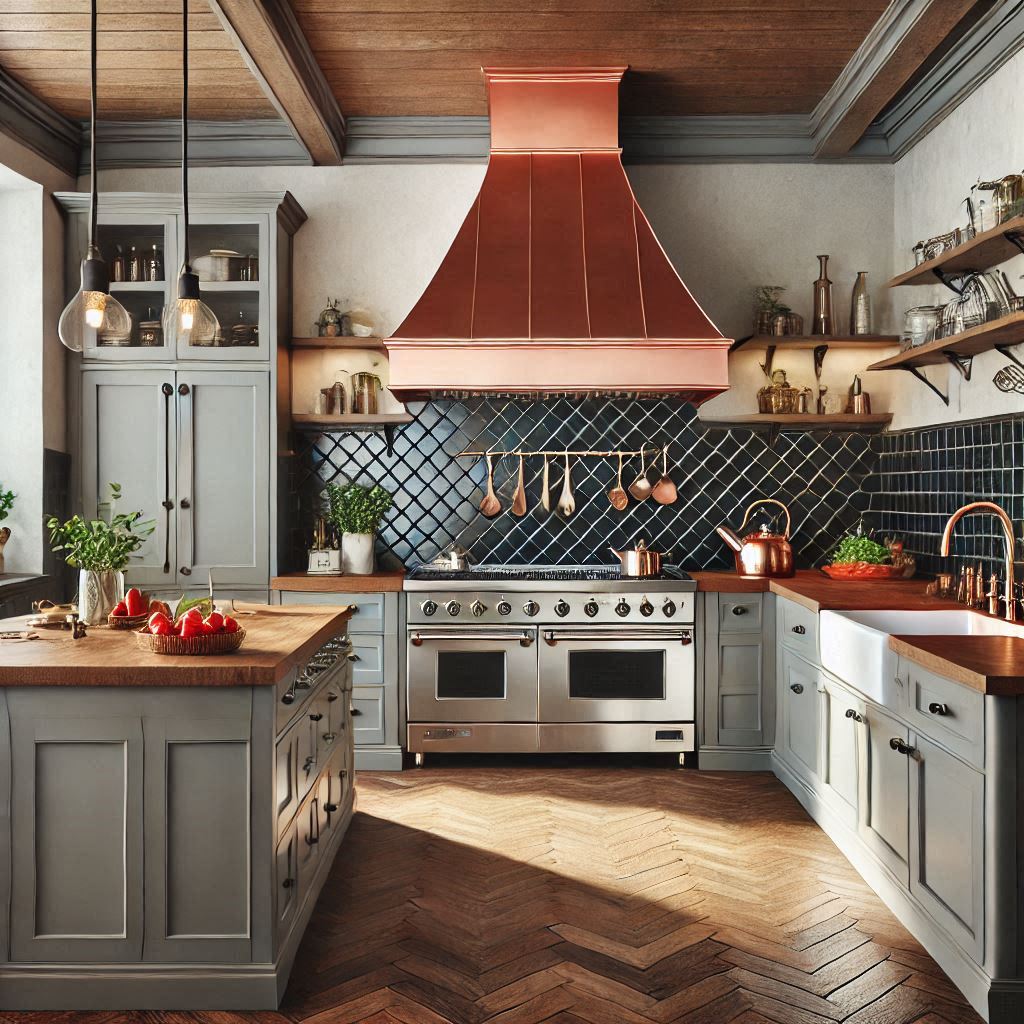
Copper is known for warm tone and living patina. It is widely used in rustic, farmhouse, and Mediterranean kitchens. Copper hoods are often hand-hammered and may include apron motifs, rivets, and crown details. Over time, copper develops deeper character, which adds authenticity and depth.
Best for: Rustic, traditional, Old World interiors
Maintenance: Mild soap and water, optional copper wax, or allow natural aging
Brass
Brass range hoods bring refined glow and a more luxurious highlight. Brushed brass softens reflection. Polished brass increases drama. Brass works well when you want a warm focal point that matches gold-toned hardware and lighting accents. It can be left to age naturally or maintained for a brighter look.
Best for: Transitional, glam, European-style kitchens
Maintenance: Gentle soap or brass cleaner, optional wax to support sheen
Wrought iron or black iron
Iron adds bold structure and industrial edge. Dark finishes create strong contrast against light stone, plaster, or painted cabinetry. Iron hoods often use straps, rivets, and heavier banding, which reinforces the forged, heritage feel. Iron works beautifully with wood beams, brick, and concrete surfaces.
Best for: Industrial, farmhouse, modern rustic kitchens
Maintenance: Keep dry, use soft cloth, oil treatments as needed
Tin
Tin brings vintage character and can be embossed or paneled for decorative detail. It is lightweight and works well in farmhouse and eclectic kitchens where you want metallic charm without heavy contrast. Tin’s lighter tone can keep a kitchen feeling bright and airy.
Best for: Farmhouse, cottage, eclectic kitchens
Maintenance: Gentle cleaning with soft cloth, avoid abrasion
Aluminum
Aluminum is lightweight and corrosion resistant, making it a practical choice for contemporary kitchens. Brushed and anodized finishes feel sleek and modern, and aluminum often suits spaces where you want the hood to look clean and minimal rather than rustic.
Best for: Modern, minimalist, industrial spaces
Maintenance: Mild detergent wipe down, no waxing required
Pewter
Pewter offers a soft silver gray tone with understated aging. It suits kitchens where you want metallic warmth without high shine. Pewter can feel romantic and refined, especially in French country and transitional interiors. Its low reflectivity helps it blend into calmer palettes.
Best for: Transitional, vintage, romantic kitchens
Maintenance: Soft cloth and non-abrasive cleaner, allow natural patina
Choosing the right size
Proper proportion helps performance and keeps the hood balanced on the wall. Start with cooktop width and then confirm chimney height based on ceiling height and cabinet layout. Always review insert and local clearance requirements before finalizing install height.
- Width: Often 3 to 6 inches wider than cooktop
- Height: Commonly 24 to 30 inches above cooktop
Always refer to manufacturer specifications for exact placement and safety clearances.
Venting types: ducted versus ductless
Venting choice affects performance. Ducted systems typically remove heat and moisture more effectively. Ductless systems can be useful when exterior venting is not possible, but they rely heavily on filter maintenance.
Ducted external venting
Ducted hoods vent air outdoors through ductwork and are generally best for heavy cooking.
- Pros: Strong removal of heat, grease, odors
- Cons: Needs exterior duct access
Ductless recirculating
Ductless hoods use charcoal filters and recirculate cleaned air back into the kitchen.
- Pros: Easier installation, no exterior vent
- Cons: Less effective for heat and moisture
Performance features to consider
When shopping for a metal wall mount range hood, focus on airflow, noise, and filter practicality.
- CFM rating: Choose based on cooking level
- Noise level: Lower sones run quieter
- Filter type: Baffle or mesh filters
- Lighting: LED or halogen task lights
- Fan speeds: Multiple levels improve control
Installation tips
Correct installation supports safety and performance. Wall mount hoods must be level, properly supported, and aligned with the cooktop centerline. Duct planning should reduce unnecessary elbows and long runs.
- Use heavy-duty brackets for heavier metals
- Confirm duct path and exterior cap placement
- Hire a professional if structural work is needed
Kitchen design styles and matching materials
- Copper: Rustic, hacienda, Mediterranean kitchens
- Brass: Transitional, French country elegance
- Iron: Industrial, modern rustic contrast
- Tin: Farmhouse comfort, decorative detail
- Aluminum: Modern minimal and clean lines
- Pewter: Soft, romantic, understated tone
Maintenance tips by material
| Material | Maintenance tip |
|---|---|
| Copper | Soft cloth, mild soap, wax optional |
| Brass | Brass cleaner or gentle soap |
| Iron | Keep dry, oil occasionally |
| Tin | Gentle cleaning, avoid abrasion |
| Aluminum | Mild detergent, no sealing needed |
| Pewter | Non-abrasive cloth, let patina evolve |
Final thoughts
A handcrafted wall mount range hood in artisan metal is functional art. The right metal can add warmth, contrast, and lasting character while supporting real ventilation performance. When you choose the correct size, venting type, and maintenance routine, your hood becomes a centerpiece that reflects your style and supports your cooking life for years.
Ready to design your modern range hood
Browse our collection of handcrafted metal hoods, each customizable in shape, finish, and size.