 US Dollar
 Euro
Euro
 Australian Dollar
 Canadian Dollar
 Polish Zloty
 British Pound

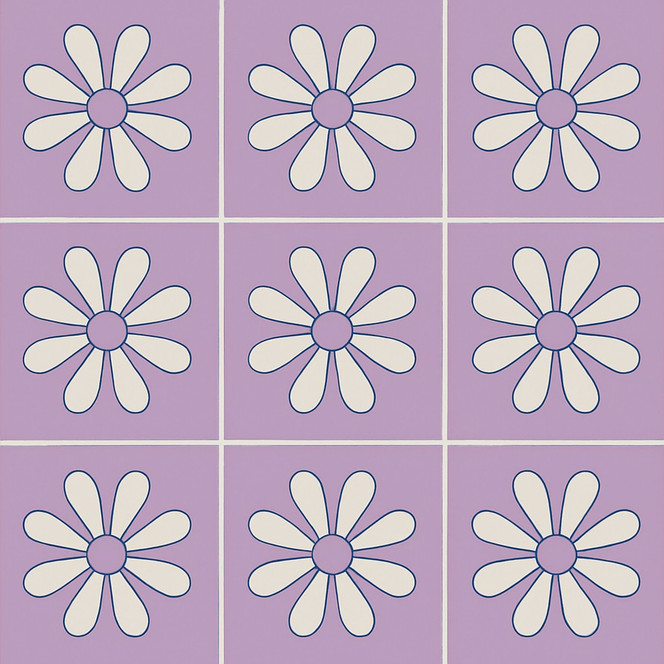
Lavender Daisy Talavera Tile: Nostalgic Folk Floral Charm
The handcrafted Lavender Daisy Talavera Tile captures the nostalgic beauty of Mexican folk art through a soft, retro-inspired color palette and sculptural simplicity. Measuring 4×4 inches (with an option for 6×6-inch formats), each ceramic tile places a single ivory-white daisy at its center, outlined in dark navy strokes that provide crisp contrast against a pastel lavender background. This delicate bloom, featuring eight softly rounded petals and a muted mauve center, evokes the carefree spirit of 1970s floral patterns. Artisans in Dolores Hidalgo, Mexico, meticulously hand-paint each tile using traditional Talavera techniques—combining centuries-old tin-glaze methods with locally sourced clays. The matte finish, free of gloss textures, highlights subtle imperfections and brushwork, lending each piece character and warmth. Perfect for eclectic, rustic, or boho interiors, this tile brings a touch of vintage charm and artisanal authenticity to any space.
Little-Known Fact: The matte texture of the Lavender Daisy design is achieved by adding ground eggshell to the clay body—a technique dating back to early Puebla workshops in the 16th century. Artisans rediscovered this method during a 1970s revival of retro styles, using hundreds of crushed eggshells per batch to recreate the soft, velvety finish that originally defined folk-inspired Talavera tiles.
Historical Roots and Cultural Heritage
The Talavera tradition was born in 16th-century Spain, where Moorish potters introduced the cuerda seca technique—outlining glaze areas with grease-resistant lines to prevent colors from bleeding. Spanish majolica workshops in Andalusia refined tin-glaze chemistry, producing vibrant, glossy ceramics. When Spanish colonists arrived in Mexico, they brought these techniques to Puebla and Dolores Hidalgo, where indigenous artisans adapted formulas to local clays and pigments. Over centuries, Talavera evolved into a unique art form, blending European methods with Mesoamerican motifs. Floral designs, including daisies, became popular as artisans incorporated native wildflowers into their repertoire. In the 1970s, a global fascination with vintage aesthetics led to renewed interest in pastel-hued folk tiles. Contemporary artisans researched old inventories and historical documentation to reintroduce eggshell-infused clays and matte glazes. The result is the Lavender Daisy tile—a celebration of cross-cultural exchange, historical craftsmanship, and retro flair.
Tile Pattern Analysis
The Lavender Daisy tile’s captivating design rests on four pattern elements that create harmony and visual balance:
- Lavender Purple Background: This soft, pastel field sets a soothing tone, reminiscent of twilight skies and springtime blooms. Its gentle hue enhances the tile’s vintage appeal and pairs well with neutral or contrasting accent colors.
- Mauve Flower Center: The warm mauve disk at the daisy’s core adds depth and focal interest. It contrasts subtly with the cool lavender, drawing the eye inward and emphasizing the petals’ symmetry.
- Ivory-White Petals: The eight softly rounded petals evoke purity and simplicity. Their generous form highlights the folk-art aesthetic, while the matte finish accentuates handbrush variations and minor texture.
- Dark Navy Outlines: Thin, hand-painted strokes define the daisy’s shape, preventing color bleed and adding graphic clarity. This cuerda seca-inspired technique ensures crisp edges and reinforces the tile’s structural geometry.
These elements work in concert to convey a naïve, hand-drawn style that feels both timeless and approachable. The balanced, symmetrical layout allows for versatile configurations, from uniform grids to playful alternate patterns.
Artisan Technique and Materials
Creating a genuine Lavender Daisy Talavera tile involves several meticulous steps. First, local clays are mined and refined, then mixed with ground eggshells for that distinctive matte texture. The crumbly clay mixture is pressed into square molds, then partially air-dried to leather-hard consistency. Artisans sketch the floral motif freehand, using fine brushes dipped in black manganese oxide to outline the daisy. They then apply a base coat of white tin glaze, sealing the clay body and providing a bright canvas. Next, layers of pastel lavender and mauve enamels are hand-brushed onto designated areas, waiting between applications to avoid glaze runs. After a slow drying phase, the tile is fired at temperatures reaching 1,100 °C in a wood- or gas-fired kiln. This high-heat process vitrifies the glazes and sets the eggshell-enriched clay. Finally, a protective matte sealing glaze is applied sparingly to preserve tactile qualities. Each batch is quality-checked for color consistency, evenness of finish, and absence of pinholes or warping.
Tile Specifications
- Sizes: Available in 4×4 and 6×6 inches to suit various design scales.
- Thickness: Approximately ¼ inch (6–7 mm) for a balance of durability and ease of installation.
- Finish: Matte ceramic glaze that accentuates hand-painted details and subtle texture.
- Weight: About 100 g for 4×4 tiles and 225 g for 6×6 tiles, facilitating handling and shipping.
- Frost Resistance: Rated for exterior use in covered areas, thanks to low porosity and durable glaze.
- Origin: Handcrafted in Dolores Hidalgo, Mexico, by multi-generation artisan families.
- Production Time: Typically 4–6 weeks from order to delivery, reflecting the artisanal process.
These specifications make the Lavender Daisy tile suitable for vertical indoor environments—such as kitchens, bathrooms, and stair risers—as well as covered outdoor features like garden nooks and patio accents.
Design Applications and Styling Tips
The Lavender Daisy tile’s gentle palette and folk-inspired motif offer endless creative possibilities:
- Checkerboard Backsplash: Alternate Lavender Daisy tiles with plain ivory field tiles to create a subtle checkerboard effect behind kitchen counters. Pair with brass hardware and white marble countertops for a chic vintage vibe.
- Bathroom Accent Wall: Cover an entire niche or wall section around a mirror with lavender daisies to craft a dreamy boudoir bathroom. Complement with rattan mirrors and soft linen textiles to echo the tile’s boho charm.
- Stair Riser Highlight: Install individual tiles on each riser to create a whimsical floral path ascending your staircase. Contrast with natural wood treads and iron railings for an eclectic fusion of materials.
- Outdoor Garden Nook: Integrate a 3×3 grid of Lavender Daisy tiles within a stucco planter wall. Surround with climbing vines or potted succulents to evoke a Mediterranean courtyard ambiance.
- Accent Frame: Frame a solitary Lavender Daisy tile within a shallow recess or picture frame molding. Use this as a focal point above a console table, paired with dried lavender bundles in vintage vases.
To unify your design, select grout in a coordinating shade—soft gray or cream—to accentuate the tile’s outlines without overpowering the pastel palette. Incorporate natural textures such as woven jute rugs, driftwood accessories, or distressed metal fixtures to reinforce the tile’s folk-art essence.
Maintenance and Durability
Preserving the Lavender Daisy tile’s vintage matte finish requires gentle care. Clean surfaces quarterly with a soft microfiber cloth dampened in a mild, pH-neutral detergent solution; avoid acidic cleaners that could etch the glaze. Rinse with clean water and gently pat dry to prevent water spots. Seal grout lines upon installation and reapply an impregnating sealer every 12 months, particularly in moisture-prone areas or covered outdoor locations. For stubborn stains—such as cooking oils or moss spray—a poultice of baking soda and water can be applied for up to 24 hours before gentle rinsing. Inspect tiles periodically for chips; minor damage can be repaired by professional ceramics restorers who match the lavender pigment and refire affected pieces. With proper care, these hand-crafted tiles maintain their color and texture for decades, becoming heirloom accents in any home or garden.
Designer’s Perspective
As an interior designer working across residential and commercial projects, I find the Lavender Daisy Talavera Tile to be an invaluable asset for crafting spaces that feel both personal and timeless. The tile’s pastel lavender backdrop exudes a gentle serenity, which I often use to soften high-contrast finishes like matte black hardware or stainless-steel appliances. Clients are drawn to the hand-drawn daisy motif for its nostalgic charm—a motif that instantly evokes warmth and authenticity compared to uniform, mass-produced ceramics. Its eight-petal form and muted mauve center offer just the right amount of graphic interest without overpowering a room’s overall palette.
In a recent urban loft renovation, I specified the Lavender Daisy tile as a backsplash behind open shelving. The subtle imperfections inherent in the matte glaze created a tactile experience, encouraging guests to reach out and explore the surface. Paired with reclaimed wood shelves and vintage glassware, the installation became a conversational focal point that bridged modern minimalism with handcrafted appeal. The daisy’s radial symmetry introduced a gentle rhythm across the wall, guiding the eye from one corner of the space to the other without overwhelming adjacent finishes.
For powder rooms and guest baths, I love creating a statement accent wall fully clad in these tiles. The soft lavender hue harmonizes beautifully with polished brass faucets and veined marble countertops, while the matte finish minimizes glare and brings out the depth of each brushstroke. In one boutique-hotel project, this approach transformed a compact powder room into a feature that guests still photograph and share—proof that thoughtful tile design can elevate even the smallest of spaces.
When applying the tile outdoors in covered patios or garden nooks, I recommend sealing the grout with a neutral-toned sealer—light gray or cream—to complement the ivory-white petals and mauve centers. Surround the tile field with terracotta planters and woven textiles to emphasize its boho-chic spirit. The tile’s low porosity and frost resistance make it perfectly suited to mild exterior environments, ensuring lasting beauty with minimal maintenance.
One of the most exciting aspects of working with Lavender Daisy tiles is the option for custom color adjustments. I frequently collaborate with artisans to fine-tune the lavender shade, ensuring it aligns seamlessly with a project’s existing color story. In preliminary design sketches, I present layout variations—checkerboard, diagonal, or staggered—to demonstrate how the tile adapts to different spatial configurations and client preferences. The uniform 4×4-inch size simplifies installation, ensuring precise alignment and minimal waste. Although the standard production time of four to six weeks requires early planning, the result is a bespoke, artful element that transforms any surface into an immersive statement of cultural heritage and handcrafted artistry.
Next Steps
If you’re ready to infuse your space with vintage floral charm, start by ordering a sample pack of both 4×4-inch and 6×6-inch Lavender Daisy tiles to test layout and color coordination. Share inspiration photos or mood boards with our design team, and we’ll provide tailored recommendations on placement, grout selection, and complementary materials. Whether you plan a backsplash, stair riser installation, or garden feature, our artisans can accommodate custom orders and expedited production timelines. To begin your project, please contact us and let us help you bring your vision to life with expert guidance and bespoke craftsmanship.
Conclusion
The Lavender Daisy Talavera Tile offers a unique blend of folk artistry, retro color palettes, and handcrafted texture that elevates any design project. From kitchen backsplashes and bathroom accent walls to stair risers and garden niches, its pastel lavender background, ivory-white petals, and dark outline combine to create a timeless yet playful aesthetic. Hand-painted in Dolores Hidalgo using centuries-old Talavera methods, each tile embodies cultural heritage and nostalgic warmth. Durable enough for covered outdoor use and easy to care for, these tiles are built to last and delight for generations. Explore our collection on the product page and discover how these tiles can add personality and warmth to your next project.