 US Dollar
 Euro
Euro
 Australian Dollar
 Canadian Dollar
 Polish Zloty
 British Pound

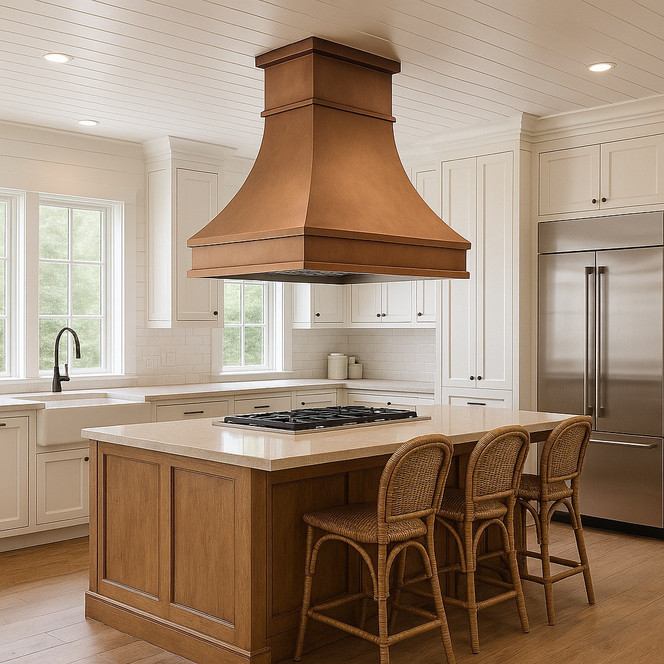
A kitchen island copper range hood is both a functional necessity and a defining design feature in open-plan kitchens. Suspended over the cooking surface, it becomes a central visual anchor while managing heat, smoke, and airborne grease. This guide explores how a handcrafted island copper hood shapes kitchen aesthetics, improves ventilation performance, and integrates seamlessly into transitional, rustic, and contemporary interiors. Explore the full kitchen island copper hood to see how form and function meet in a freestanding design.
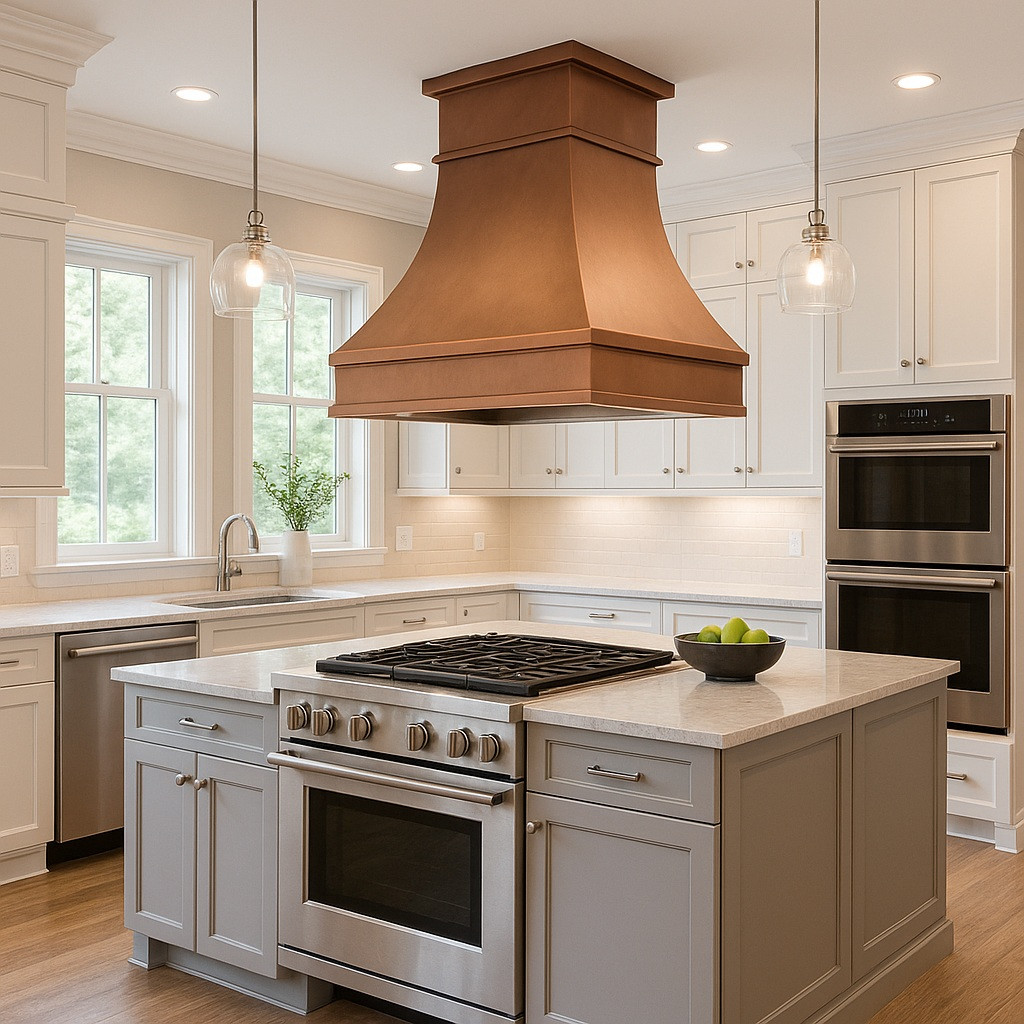
Why Island Copper Range Hoods Matter
Island kitchens remove the visual support of surrounding cabinetry, placing the ventilation system in full view. An island copper range hood performs differently in this setting, as it must capture rising vapors from all sides while remaining visually balanced from every angle. Copper is particularly effective here because its natural warmth offsets the open space, preventing the kitchen from feeling sterile or unfinished. Unlike stainless steel, copper introduces depth, movement, and character that softens expansive layouts. In island applications, the hood is no longer hidden infrastructure. It becomes an architectural element that defines the room.
Design Balance in Open Kitchens
Because an island hood is visible from every direction, proportion is critical. Width, depth, and height must relate to the island size, ceiling height, and surrounding sightlines. A copper hood with insufficient depth may struggle with capture efficiency, while an oversized canopy can overwhelm the space. Well-designed island copper hoods use subtle tapers, curved edges, or stepped profiles to maintain visual balance without excess bulk. Copper’s reflective quality also helps distribute light evenly, making large kitchens feel more cohesive rather than fragmented.
Transitional Style Compatibility
Transitional kitchens blend traditional warmth with contemporary structure, making copper an ideal material choice. A kitchen island copper range hood bridges classic detailing and clean geometry, especially when paired with neutral cabinetry and stone surfaces. Smooth copper finishes lean modern, while lightly hammered textures introduce handcrafted depth without appearing rustic. In open spaces where multiple materials converge, copper provides a unifying visual thread that feels intentional rather than decorative.
Ventilation Performance Over an Island
Island installations demand careful airflow planning. Without surrounding walls, air currents behave differently, requiring adequate canopy depth and proper blower sizing. Copper hoods are commonly built to accommodate high-performance inserts that match the cooking style and appliance output. A deeper capture area helps guide rising steam and grease toward the filters, while correct mounting height ensures effective extraction. In well-designed island setups, ventilation performance and visual elegance operate together rather than competing for priority.
Surface Texture and Light Interaction
Copper reacts uniquely to light, which is especially important in kitchens with large windows or skylights. Hammered copper diffuses reflections, reducing glare while emphasizing artisan texture. Smooth copper creates a more polished appearance, reflecting surrounding materials and adding brightness to the room. In island installations, where the hood is often lit from multiple angles, this interaction with light enhances depth and dimensionality rather than flattening the design.
Ceiling Height and Chimney Proportions
Island copper range hoods must visually connect the island to the ceiling without feeling intrusive. In standard ceilings, shorter chimneys maintain openness. In taller spaces, extended chimney sections help anchor the hood visually and prevent it from appearing undersized. Copper adapts well to these vertical adjustments because seams, patina variation, and subtle detailing break up large surfaces gracefully. Proper proportion ensures the hood feels like part of the architecture rather than an afterthought.
Material Pairings That Work
Copper complements a wide range of materials commonly found in island kitchens. Natural wood islands gain warmth and contrast when paired with copper above. Stone countertops benefit from copper’s organic tones, while painted cabinetry gains depth without visual heaviness. Black iron accents, brass fixtures, and neutral tiles all interact harmoniously with copper, making it a versatile centerpiece in mixed-material kitchens.
Maintenance in Open-Plan Environments
Because island hoods are fully exposed, maintenance considerations matter. Copper is forgiving in daily use, as fingerprints and minor marks blend into the surface rather than standing out. Regular cleaning with mild soap and water maintains appearance without disrupting the patina. Many homeowners appreciate that copper ages naturally, developing character over time rather than showing wear as damage. In open kitchens, this evolving surface adds authenticity rather than visual noise.
Island Installation Considerations
Installing a copper island hood requires early planning. Ceiling support, duct routing, and electrical placement must align precisely with the hood dimensions. Island installations often require reinforced ceiling framing due to the hood’s weight. When planned correctly, installation results in a clean, floating appearance with no visible compromises. Copper’s durability ensures the hood maintains structural integrity even in demanding cooking environments.
Design Longevity and Value
A kitchen island copper range hood is a long-term design investment. Unlike trend-driven finishes, copper remains relevant across decades of design evolution. Its ability to adapt visually as interiors change gives it lasting value. Whether the surrounding space shifts toward modern minimalism or rustic warmth, copper continues to feel appropriate rather than dated. This adaptability makes it a practical choice for homeowners focused on both beauty and longevity.
Conclusion
A thoughtfully designed island copper range hood transforms an open kitchen into a cohesive, functional space. It anchors the island visually, supports effective ventilation, and introduces warmth that balances expansive layouts. When properly proportioned and installed, copper becomes an architectural feature rather than a background utility. To explore additional styles and configurations, browse the complete copper range hoods collection or view all available designs in the metal range hoods category.