 US Dollar
 Euro
Euro
 Australian Dollar
 Canadian Dollar
 Polish Zloty
 British Pound

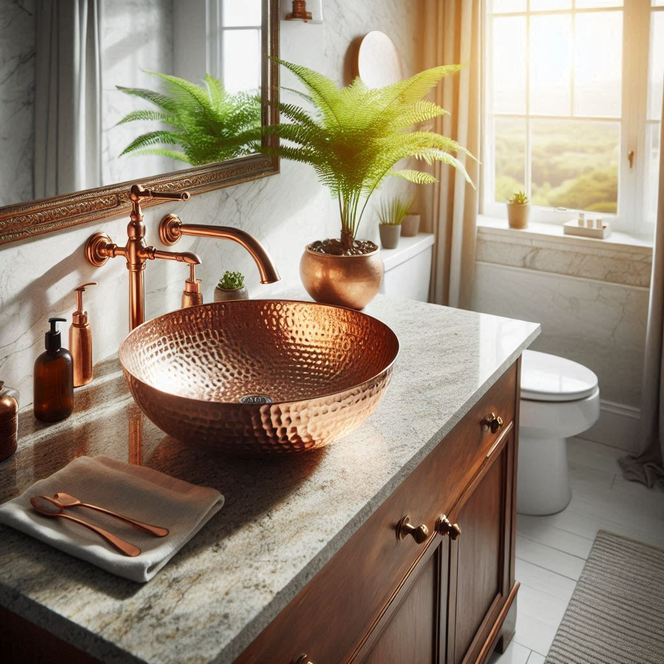
Hand-Hammered Drop-In Copper Sinks
Introduction
Transform your bathroom into a stunning, luxurious retreat with hand-hammered drop-in copper sinks from Rustica House. Crafted by skilled artisans using traditional hammering and patination techniques, each sink features a uniquely dimpled surface that reflects light and water in mesmerizing patterns. The warm glow of copper imbues the room with rustic charm and timeless elegance, while the durable construction ensures decades of reliable performance. Designed for simple drop-in installation, these sinks integrate seamlessly into granite, marble, wood, or tile countertops, requiring only a standard countertop cutout to create a custom-looking fixture without complex plumbing modifications.
Every Rustica House sink begins as a sheet of 12-gauge pure copper, hand-formed over a wooden mold and struck with planishing hammers to produce its signature texture. After shaping, the sink is refined, sanded, and treated with one of our signature finishes—bright polished copper, rich antique patina, or deep aged bronze—each sealed to lock in color and protect against water spots. The result is a one-of-a-kind basin that marries artisanal heritage with contemporary convenience, turning routine tasks—washing hands, brushing teeth—into moments of ritual and beauty.
Drop-In Sink Features
Rustica House drop-in copper sinks offer a host of premium features designed to elevate both aesthetics and functionality in your bathroom. Each sink is handcrafted from thick-gauge, pure copper by master metalsmiths who employ centuries-old hammering techniques to sculpt and texture the basin. This process ensures exceptional durability and imparts a tactile, handcrafted quality unmatched by mass-produced fixtures.
Installation is straightforward: the sink’s rolled rim fits snugly into a 17″–20″ countertop cutout—depending on model—creating a secure, watertight seal without complex undermount hardware. Available finishes include bright polished copper for a radiant focal point, antiqued patina for a warm, timeworn appearance, and deep aged bronze for rich, moody drama. Copper’s inherent corrosion resistance and natural patina evolution guard against staining and mineral buildup, while its antimicrobial properties inhibit bacteria growth, ensuring a hygienic surface. These sinks complement a wide range of design styles—from rustic farmhouse to industrial loft to transitional elegance—making them versatile additions to any renovation or new build.
Bath Sink Key Benefits
Choosing a hand-hammered drop-in copper sink from Rustica House brings a suite of benefits that set copper apart as both a practical and luxurious bathroom fixture. First, copper’s natural antimicrobial properties create a hygienic basin that resists bacteria and mold, promoting cleaner, healthier surfaces without harsh chemicals. Second, copper excels in durability: even heavy impacts and frequent use cannot easily dent or crack its solid gauge structure, guaranteeing a lifetime of service.
Copper’s heat conductivity and retention also enhance comfort: warm water held in a copper basin stays pleasantly tempered longer, adding a touch of spa-like indulgence to everyday routines. Over time, each sink develops a unique patina—a living finish that deepens in color, highlights hammer marks, and tells the story of years of use. This evolving character transforms your bathroom into a dynamic space that grows more beautiful with age. Finally, the quick drop-in installation means minimal disruption to your project timeline and cost savings on labor, making these sinks a smart investment that adds immediate value and lasting allure to your home.
Why Drop-In Bathroom Sinks?
Drop-in copper sinks offer an ideal balance of style, convenience, and adaptability for bathroom projects of all sizes. Unlike undermount sinks, which can require specialized mounting hardware and stone countertop support, drop-in sinks rest on the countertop surface, supported by a rolled lip that conceals rough edges and seals with simple plumber’s putty. This makes retrofits or remodels easier—no need to alter existing cabinetry or reinforce countertops—while still achieving a custom look comparable to more complex installations.
Design-wise, drop-in copper sinks showcase their hammered surfaces prominently, as their rims frame the basin’s interior like an artisanal picture. They function well with vessel faucets, wall-mount taps, or single-hole deck-mounted fixtures, giving you freedom to mix and match hardware styles. Whether you’re renovating a vintage powder room or adding a focal point to a modern master bath, a hand-hammered drop-in copper sink offers a distinctive accent that harmonizes with countertops, backsplashes, and lighting. The ease of installation, combined with copper’s longevity and evolving patina, makes these sinks both a practical and poetic choice for homeowners seeking beauty, performance, and heritage in one elegant package.
History of Drop-In Sinks
The drop-in sink concept emerged in the early 20th century as bathroom standards evolved and mass production of sanitary ware expanded. Early sinks were typically wall-hung porcelain basins, leaving floor space open beneath but requiring robust wall support. As bathroom designs grew more sophisticated, the need for integrated vanity tops featuring built-in sinks became apparent. Manufacturers developed the drop-in configuration—also known as top-mount—to allow sinks to be installed into pre-cut countertop holes, offering a more polished look without the complexity of undermount systems.
Drop-in sinks gained popularity in post-war suburban homes in the 1950s and ’60s due to their ease of installation, cost-effectiveness, and compatibility with emerging materials such as laminate, tile, and cultured marble. Installers could quickly fit new sinks into existing vanity surfaces without structural modifications, facilitating the rapid growth of bathroom remodels during housing booms. Over subsequent decades, the drop-in style evolved from utilitarian white porcelain to various metals, glass, and stone options, enabling designers to create focal points and integrate color and texture seamlessly. Today, drop-in sinks remain a preferred choice for both DIY and professional installations, balancing aesthetic flexibility with straightforward installation, and providing an ideal platform for showcasing artisanal materials like hand-hammered copper.
History of Copper in the Bathroom
Copper’s use in domestic water vessels dates back to ancient civilizations, where its antimicrobial properties and durability were prized for storing and transporting water. In medieval and Renaissance Europe, copper basins and washing bowls were staples in noble households and monastic infirmaries, ensuring sanitary conditions before the advent of modern plumbing. By the Victorian era, copper fixtures—towel rails, soap dishes, and washbasin stands—signified both hygiene and craftsmanship in burgeoning middle-class bathrooms.
The early 20th century ushered in widespread indoor plumbing, but chrome and nickel finishes soon overshadowed copper’s natural warmth. Yet copper persisted in high-end settings, prized for its evolving patina and health benefits. In the late 20th and early 21st centuries, copper experienced a renaissance as homeowners and designers sought sustainable, handcrafted materials. Contemporary copper bathroom fixtures—sinks, tubs, faucets—combine ancient metallurgical techniques with modern sealing technologies, allowing copper’s antimicrobial action and rich aesthetic to flourish with minimal maintenance. Today’s copper installations connect us to a lineage of artisanal practice and functional luxury that spans millennia.
History of Copper Sinks
Copper sinks have a rich heritage rooted in both utility and artistry. Earliest examples appear in ancient Egypt, where copper vessels stored water for purification rituals. Bronze Age societies further refined copper alloy techniques, creating durable wash basins and cooking pots. During medieval times, copper sinks were cast for monastic hospitals and wealthy estates, valued for corrosion resistance and ease of cleaning. The Renaissance saw elaborately chased and gilded copper basins in aristocratic bath chambers and kitchens, reflecting status and hygiene awareness. In the 18th and 19th centuries, copper and its alloy bronze were common in colonial American homes, often custom-fit to wooden cabinetry.
By the 19th century, mass-produced porcelain dominated kitchen and bathroom sinks, but copper remained popular for specialty applications—laboratory sinks, industrial wash stations, and artisan studios. The late 20th-century revival of handcrafted design brought copper sinks back into residential spaces, with makers emphasizing hand-hammered textures, bespoke sizes, and eco-friendly sealing. Today’s copper sinks blend centuries-old craftsmanship with modern performance, offering homeowners a piece of living history that functions as a practical, hygienic, and visually stunning centerpiece in any bathroom or kitchen.
Conclusion
Hand-hammered drop-in copper sinks from Rustica House embody the perfect fusion of artisanal heritage and contemporary convenience. Their unique textures, evolving patinas, and natural antimicrobial properties make them as functional as they are beautiful. Whether you’re embarking on a full bathroom remodel or simply seeking a statement piece to elevate your powder room, a drop-in copper sink provides effortless installation, lasting durability, and an ever-deepening character that grows more captivating with age. Explore our full collection of Drop-In Copper Bathroom Sinks to find the ideal style, size, and finish for your home. For personalized design guidance, custom sizing, or project consultations, contact our team—we’re here to help you bring enduring beauty and artisanal quality to your bathroom sanctuary.