 US Dollar
 Euro
Euro
 Australian Dollar
 Canadian Dollar
 Polish Zloty
 British Pound

Copper countertops bring warmth, artisanal craftsmanship, and lasting performance to both kitchens and bathrooms. Their hammered texture and natural patina make them versatile enough for modern, rustic, and traditional interiors alike. Whether used as a kitchen island surface or a bathroom vanity, hammered copper offers beauty and durability that evolve over time. In this guide we’ll explore design inspiration, practical considerations, installation tips, maintenance advice, and functional benefits that make hammered copper counters a standout choice in home design. Discover why these surfaces are a favorite among designers and homeowners alike, and how they can transform your space into something truly special.
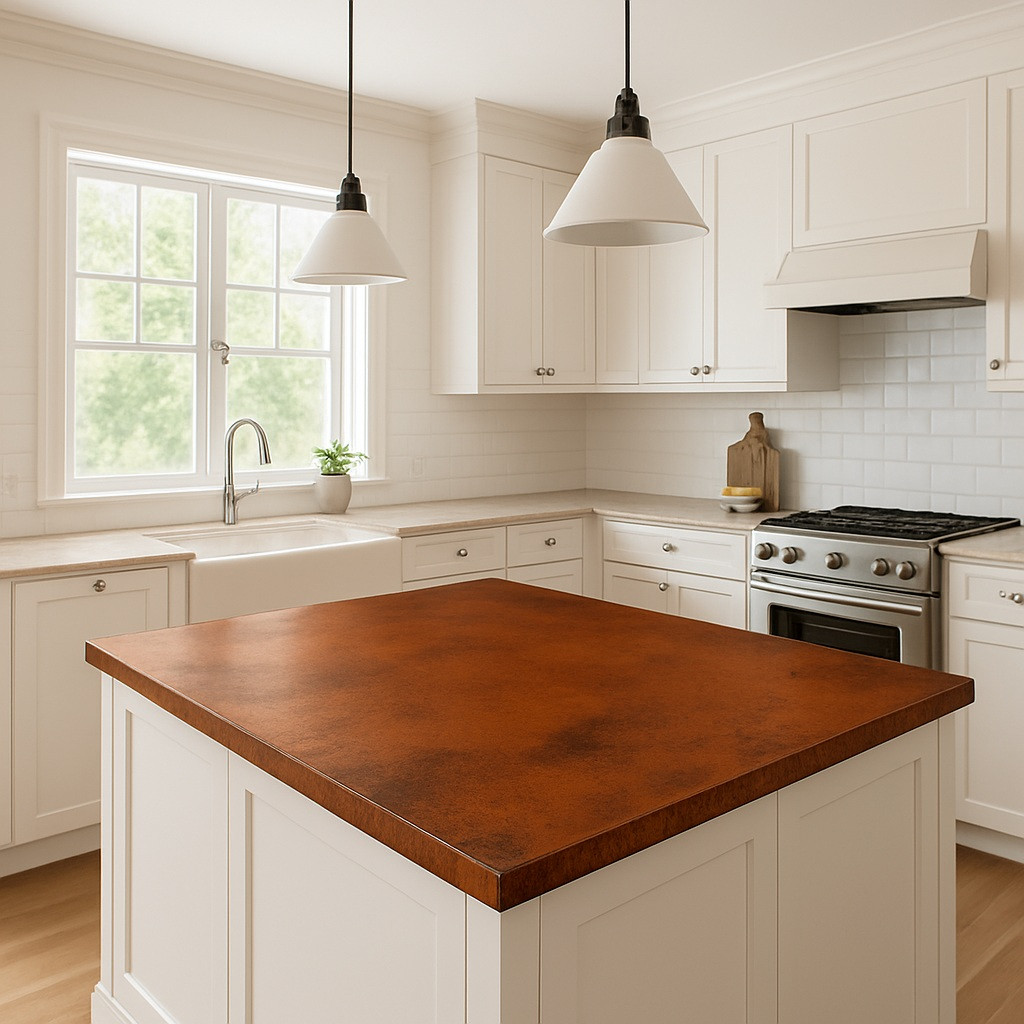
Hammered copper tabletop enhancing a kitchen island with rich texture and reflective warmth.

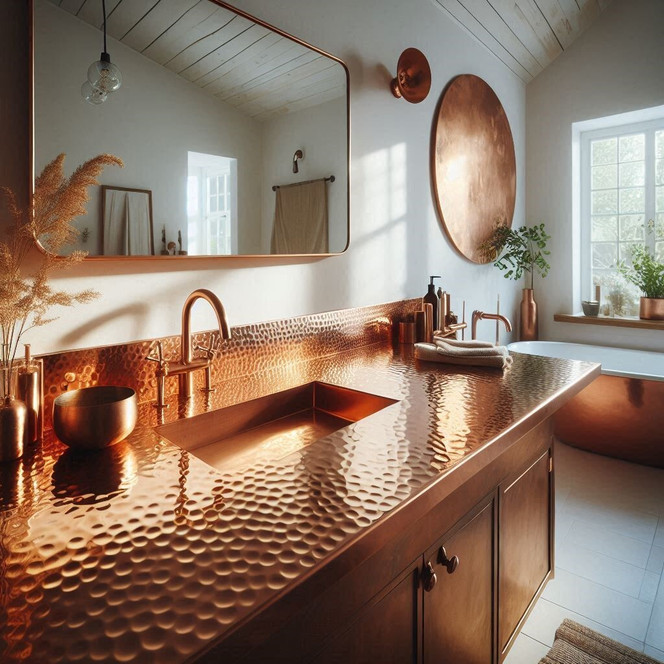
Elegant hammered copper countertop in a bathroom, adding artisanal detail and timeless appeal.
What Makes Hammered Copper Counters Special?
Hammered copper counters stand apart because they blend artistic craftsmanship with everyday utility. Unlike uniform, manufactured surfaces, copper gains character over time. Its surface subtly changes with use, developing a patina that reflects light differently and adds depth to the material’s appearance. This is especially true with the hammered texture, where tiny indentations create a lively interplay of highlights and shadows. The result is a surface that feels alive and rooted in tradition, yet completely suited to contemporary living.
Copper’s antimicrobial qualities also add a layer of practicality for kitchen and bathroom use. Studies have shown that copper surfaces can reduce bacterial presence more rapidly than many other materials. While no surface can replace proper cleaning routines, this natural advantage makes copper counters an appealing choice for spaces where hygiene matters most.
Designing with Hammered Copper in the Kitchen
Centerpieces and Island Tops
The kitchen island often becomes the heart of the home. Using a hammered copper counter for this central surface not only enhances visual interest but also supports daily tasks. The warm, rich tones of copper complement wood, stone, tile, and stainless steel, allowing island tops to act as bridges between different materials in open-plan kitchens. When used in a rectangular island configuration, copper’s unique finish makes the countertop feel intentional and custom-made, elevating the entire design.
In addition to aesthetics, copper’s thermal properties also make it enjoyable to work on. While copper isn’t ideal for cutting directly on the surface, it stays cool to the touch, which can be pleasant when prepping ingredients. Pair your copper island with functional elements such as integrated sinks or pull-out cutting boards to balance beauty with use.
Backsplashes and Accent Surfaces
Copper counters also shine as accent surfaces. A hammered copper backsplash, for example, creates continuity between the countertop and the surrounding wall without overwhelming the space. These accents work particularly well in kitchens with Mediterranean, industrial, or rustic themes, where texture and material play important roles in visual storytelling.
When pairing copper backsplashes with countertops, consider coordinating materials in surrounding cabinetry and hardware. Matte black fixtures, brushed brass handles, or natural wood tones can enhance copper’s warmth while maintaining a cohesive palette throughout the kitchen.
Bringing Hammered Copper to the Bathroom
Vanities and Counter Surfaces
Copper is a beautiful choice for bathroom vanities because it adds organic warmth and a sense of craftsmanship to a room often dominated by ceramic or stone. A hammered copper counter can pair with vessel sinks made of porcelain, glass, or even matching copper for a coordinated, spa-like feel. The patina that develops over time in bathrooms tends to be gentler and slower, thanks to relatively lower heat and direct food acids than in kitchens, preserving the visual richness of the copper.
Bathrooms with hammered copper vanity tops often evoke a sense of luxury and tradition. Consider pairing these counters with soft lighting, natural fiber towels, and wood or stone accents to create a space that feels both elegant and grounded. Copper works exceptionally well with neutral palettes — whites, creams, greys — but also complements deeper tones like forest green and navy.
Integrated Sink Designs
One of the luxurious options with hammered copper counters is integrating the sink directly into the countertop surface. This creates a seamless look that feels both organic and high-end. Integrated sinks reduce seams where water and debris could collect, making maintenance easier. When well-designed, the sink blends into the countertop visually, emphasizing the material’s beauty rather than the fixture’s shape.
Copper sinks can be hammered to match the counter surface or left smooth for contrast. In either case, the patina evolution will link the counter and basin aesthetically, creating a natural harmony within the design.
Material and Finish Options
Polished vs Hammered Copper Finishes
Copper counters can come in polished or hammered finishes, each offering distinct visual effects. Polished copper surfaces reflect more light and feel elegant and refined, making them well-suited for contemporary or transitional interiors. Hammered finishes scatter light and bring tactile richness to the surface, adding depth and visual interest. In bathrooms, hammered copper can soften bright lighting and create a more intimate, tactile space.
Deciding between polished and hammered finishes often depends on how you want the copper to interact with the rest of your materials. Highly reflective polished copper pairs beautifully with clean lines and lighter color schemes, whereas hammered copper builds a dialogue with rustic textures, handcrafted tiles, and natural wood elements.
Patina and Aging Considerations
Copper’s patina evolves differently based on environmental conditions, such as humidity, light exposure, and how often the surface is used. Many homeowners appreciate the natural aging process, while others prefer a more stable appearance. Protective finishes like waxes or lacquers can slow the patina’s progression, preserving a desired tone for longer.
In kitchens, acidic substances like lemons, vinegar, and wine can accelerate patina changes if allowed to sit on the surface. Quick cleanup routines help maintain a more uniform tone. In bathrooms, where surfaces see less acidic contact, patina changes are often more subtle, allowing the natural character of the copper to develop gracefully over time.
Practical Installation Advice
Installing hammered copper counters requires careful planning and skilled craftsmanship. Because copper is softer than stone or quartz, it needs solid support and proper sealing around sinks, edges, and cutouts. Professional fabricators often use plywood or other reinforced substrates to support copper panels, ensuring long-term stability and avoiding warping. Edges can be finished with traditional rolled hems, custom metal trim, or integrated edge profiles that tie into cabinetry.
Before installation, measure precisely for cabinetry, sinks, and appliances. Because copper expands and contracts slightly with temperature changes, small gaps and flexible seals help accommodate movement without compromising performance. Skilled installers will account for these nuances, delivering a surface that feels seamless and intentional.
Maintenance and Care Tips
Daily Cleaning Routines
Caring for hammered copper counters is simpler than many homeowners expect. For everyday cleaning, use mild soap and warm water with a soft cloth. Abrasive cleaners or pads can damage protective finishes and scratch the surface. Because copper shows fingerprints and smudges differently than stone, cleaning routines may feel gentle and forgiving compared with harsh scrubbing often associated with tile or granite.
Handling Patina Variations
If you prefer to maintain a particular look, a gentle application of beeswax or a specialized copper polish can preserve the current tone and slow patina shifts. For those who embrace the material’s evolution, occasional wipe-downs to remove surface oils and residues are usually sufficient. Over time, copper’s color shifts — often becoming deeper and more nuanced — adding a narrative quality to the surface.
Design Pairings and Styling Ideas
Complementary Materials for Kitchens
Copper counters work beautifully with various materials. Natural wood cabinetry brings warmth and continuity, while stone backsplashes — such as travertine, limestone, or slate — create layered texture. Dark hardware and matte finishes help balance copper’s reflective qualities. In kitchens with painted cabinets, consider deeper hues like charcoal or forest green to emphasize copper’s rich tones.
Bathroom Styling with Copper
In bathrooms, copper counters pair well with soft textiles, woven baskets, and neutral stone or tile. Metallic accents such as brushed brass or matte black fixtures enhance the artisanal feel. Reflective mirrors — especially antique or framed options — amplify the counter’s warm glow and tie the room together visually.
Custom Options and Variations
Copper counters are inherently customizable. Beyond surface texture and finish, you can choose edge profiles, sink integration details, and coordinated metal accents. For example, apron-front copper counters with integrated basins make a dramatic statement in bathrooms, whereas elongated island tops with hammered edges serve as conversational pieces in kitchens.
One popular custom variation is the hammered copper top bath kitchen counter dining table, which bridges functional countertop with dining space, creating a multi-purpose surface that serves both culinary and social activities.
Benefits That Last a Lifetime
Investing in hammered copper counters offers both aesthetic and practical advantages. Copper ages beautifully, resisting cracks and chips that can plague stone surfaces. Its antimicrobial properties contribute to surface hygiene, and the material’s warmth creates inviting environments in both kitchens and bathrooms. Unlike synthetic surfaces that may feel cold or generic, copper brings a handcrafted, timeless quality that feels tailored to your home’s personality.
Conclusion: Embracing Copper in Your Home
Whether you’re renovating a kitchen island or updating a bathroom vanity, hammered copper counters offer a compelling blend of beauty, performance, and character. Their versatility — from polished contemporary to richly textured hammered finishes — allows them to enhance a broad range of design styles. For more inspiration, explore our offerings in handcrafted tables & tabletops and our range of handcrafted tables & tabletops to discover coordinating surfaces and accents that elevate your entire living space.