 US Dollar
 Euro
Euro
 Australian Dollar
 Canadian Dollar
 Polish Zloty
 British Pound

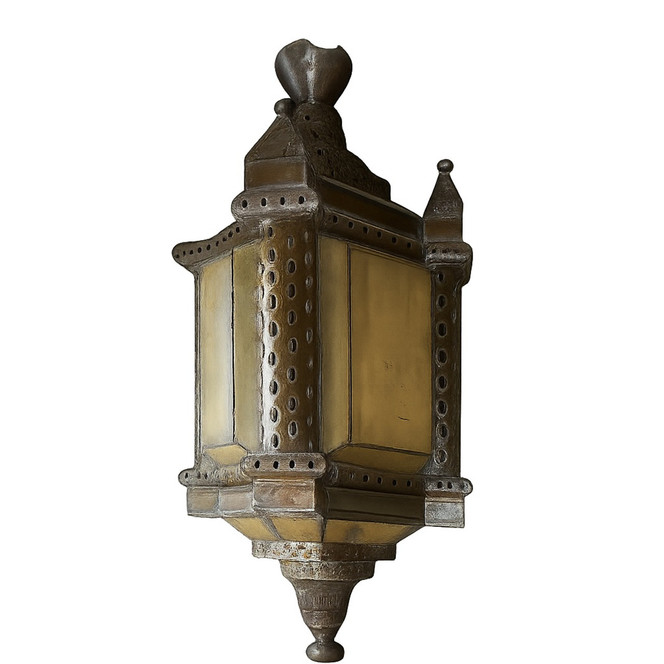
Decorative Moorish Pendant Lamp
This hand-punched metal lantern masterfully blends Spanish Colonial and Moorish design traditions, making it ideal for rustic and heritage-inspired settings. Its octagonal form, aged bronze framework, and contrasting brass panels create a visually rich structure, while the perforated detailing enhances both texture and light diffusion. Decorative turrets and a spindle base evoke fortress architecture, nodding to Mediterranean and Mexican influences. With a visibly handcrafted finish and traditional fabrication techniques, this lantern is perfect for hacienda courtyards, mission-style entryways, and Mediterranean exteriors where old-world ambiance is key.
History of Forged Iron as a Decorative Element
Forged iron has been a pillar of human craftsmanship for over 4,000 years, dating back to the Iron Age when early smiths discovered that heating iron ore in simple furnaces transformed it into malleable metal. Initially, iron was prized for its strength and utility—tools, weapons, and agricultural implements were among the first products. However, as blacksmithing techniques improved, artisans recognized iron’s potential as a decorative medium. By the classical era, Greek and Roman smiths were forging intricate iron gates and grilles to embellish public buildings and private villas, combining function with ornamental flourishes.
During the medieval period, the art of iron forging flourished across Europe. Castles and cathedrals featured massive wrought-iron doors, hinges, and window grilles embellished with scrollwork, heraldic crests, and stylized foliage. Blacksmiths honed their skills through apprenticeships, mastering techniques such as forge welding, twisting, and punching to create detailed patterns in heated iron. These decorative ironworks served both protective and aesthetic roles, safeguarding interiors while projecting power and artistry to onlookers.
By the Renaissance, ironwork had become a celebrated art form. Italian and French masters pioneered lavish balcony railings, stair balustrades, and furniture mounts featuring Baroque curves, Rococo shells, and intricate cartouches. The advent of the industrial forge allowed for larger-scale production without sacrificing artistry. Yet, even as factories churned out standard elements, bespoke blacksmith shops continued to produce one-of-a-kind commissions for noble estates, royal palaces, and ecclesiastical settings, preserving the tradition of the artisan smith.
In the 18th and 19th centuries, decorative ironwork became integral to urban architecture. Cities like Paris, London, and New York showcased grand iron balconies, street lamps, and fence enclosures in the flourishes of Neoclassical, Gothic Revival, and Art Nouveau styles. Pattern books and catalogs circulated designs, making forged iron accessible to a growing middle class. At the same time, craftsmen continued to innovate—combining cast components with hand-forged details to achieve both consistency and character.
The 20th century ushered in new materials and methods, yet forged iron retained its allure. Art Deco smiths crafted sleek, geometric grilles and railings that reflected the modern age’s fascination with machine-stamped precision. Mid-century designers experimented with minimalist, exposed iron elements, integrating them into modernist interiors as both structural supports and decorative accents. Hand-forged iron became a hallmark of bespoke architecture, adding warmth, texture, and a sense of craftsmanship that factory-made materials could not replicate.
In recent decades, forged iron has experienced a renaissance among artisans and designers seeking authenticity and sustainability. Today’s blacksmiths blend traditional hammers, anvils, and coal-fired forges with contemporary power hammers and oxygen-fuel torches. They create ironwork ranging from rustic barn doors and chandelier frames to sculptural garden gates and interior partitions. Each piece bears the subtle irregularities of handcraft—hammer marks, varied patinas, and hand-welded seams that testify to the maker’s skill.
Beyond its beauty, forged iron offers durability and adaptability. Properly maintained, iron elements can last centuries—acquiring a weathered patina that enriches their visual appeal. Modern protective coatings and finishes enhance corrosion resistance, while designers combine iron with wood, glass, and stone to achieve sophisticated, mixed-material compositions. Whether used indoors as a pendant lamp frame or outdoors as a courtyard lantern, forged iron continues to bridge past and present—reminding us of the forge’s primal power and the enduring artistry of the blacksmith’s craft.
Lantern Design Features
The lantern embodies Spanish Colonial and Moorish Revival aesthetics, reflecting architectural traditions from Mexico and Southern Spain. Pointed turret details and intricate perforated metalwork draw on historical motifs from Andalusia and North Africa, while the interplay of bronze and brass finishes adds warm contrast and depth.
Shape
Featuring a vertically elongated octagonal body with symmetrical faceted sides that taper toward both top and base, this pendant lamp achieves a balanced, fortress-like silhouette. A squat crown finial anchors the top, and a stepped spindle base provides visual weight below—perfect for vertical suspension in vaulted or open-air spaces.
Decorative Elements
Each vertical support is adorned with oval and round perforations that diffuse light in intricate patterns. The inset brass panels are bordered by ornamental bands, and the turret-style battlements along the crown evoke the ramparts of historic Moorish fortresses. These handcrafted details give the lamp an artisan quality that’s both tactile and luminous.
Color & Texture
The aged bronze frame contrasts with matte brass panels to create a dual-tone patina that deepens over time. Subtle pitting and oxidation mimic hand-hammered metal, while perforated sections add lightness and intricacy to the overall form. This textured finish works beautifully in rustic illumination schemes throughout the home.
Regional Influence & Production
Strongly inspired by Mexican Colonial and Moroccan motifs, this lantern nods to both Santa Clara del Cobre metalwork traditions and Mudejar architecture. Hand-forged, riveted, and hand-punched by skilled artisans, each piece showcases blacksmith methods passed down through generations, ensuring no two lamps are exactly alike.
Ideal Settings
- Spanish Colonial Courtyards
- Moroccan-Inspired Entryways
- Mediterranean Terraces
- Rustic Mission-Style Interiors
- Hacienda Outdoor Walkways
- Andalusian Arches and Hallways
- Traditional Mexican Colonial Homes
Lamp Specifications
- Height: 30–32 in. (including crown)
- Width: 14–16 in. at widest point
- Color: Aged bronze frame with matte brass panels
- Texture: Hammered & oxidized; perforated detailing
- Finish: Patinated dual-tone bronze & brass
- Glass: Semi-transparent antique “old mirror”
- Production + Delivery Time: Approx. 8 weeks
Conclusion
Elevate your space with this Decorative Moorish Pendant Lamp—an heirloom-quality lantern that fuses Spanish Colonial elegance with Moorish intricacy. Perfect for both indoor and outdoor heritage settings, its handcrafted details and dual-tone patina will cast enchanting patterns of light and shadow, creating an ambiance of timeless warmth.
To learn more or place your order, visit our Decorative Moorish Pendant Lamp product page or contact us directly.