 US Dollar
 Euro
Euro
 Australian Dollar
 Canadian Dollar
 Polish Zloty
 British Pound

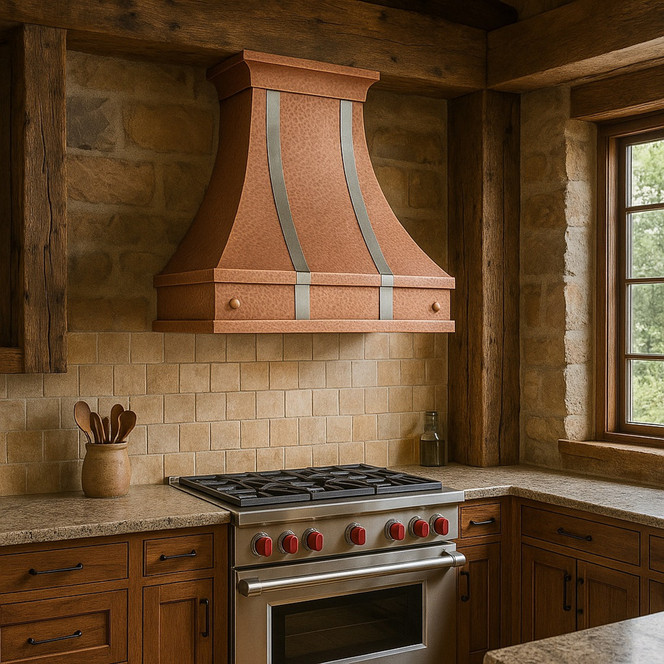
Copper range hoods instantly anchor a kitchen with warmth, depth, and artisan character. When you combine hammered copper with cool metal detailing, the effect becomes even more distinctive. The copper kitchen extractor hood with zinc accents brings that contrast to life, pairing a sloped copper body with polished zinc straps for a statement piece that feels both handcrafted and tailored.
Design Story and Overall Aesthetic
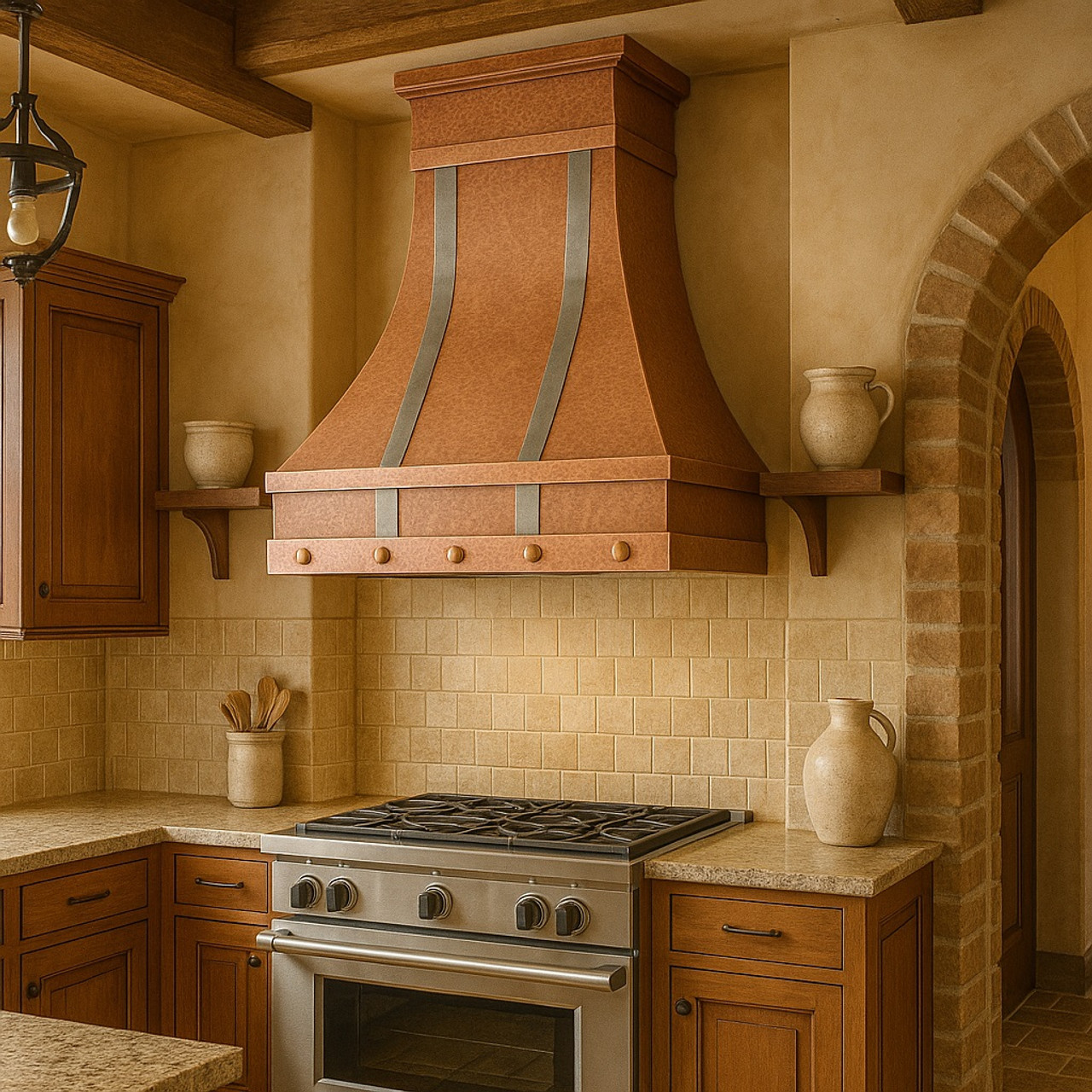
This copper extractor hood is built around a clean, sloping profile that tapers gently toward a compact upper section. The silhouette feels sleek without becoming minimalist, creating a bridge between rustic charm and refined design. A lower apron anchors the composition, visually widening the hood over the cooktop and improving capture area. The hammered copper surface introduces depth and movement, catching changing light throughout the day. Instead of heavy ornamentation, the piece relies on proportion, curve, and subtle texture. The result is a hood that draws the eye immediately yet never overwhelms cabinetry, stone, or tile around it. It feels like a custom-made architectural feature rather than a simple appliance.
Copper and Zinc: Warm Meets Cool
The most striking detail is the combination of warm copper and cool zinc. Two polished zinc straps run vertically from the crown to the apron, visually lengthening the hood and emphasizing its gentle slope. Their reflective surface adds crisp contrast against the softer hammered copper patina. This pairing mirrors classic European metalwork, where mixed metals signaled craftsmanship and status. The zinc strips also frame the center panel, giving the hood a tailored, almost couture feel. Rather than relying on painted finishes or printed textures, this design uses genuine materials in dialogue. Copper brings warmth and depth; zinc provides linear precision. Together, they create a focal point that feels luxurious and genuinely handcrafted.
Mediterranean Kitchen Inspiration
In a Mediterranean-inspired kitchen, this hood comes fully into its own. Think creamy plaster walls, soft stone backsplashes, and natural wood cabinetry washed in warm stains. The hood’s hammered copper echoes terracotta floors and hand-painted tile accents, while the zinc straps relate to brushed stainless appliances or iron hardware. The sloped body feels reminiscent of traditional European hearths, yet the clean lines keep everything current. Paired with arched niches, rustic beams, and simple open shelving, the hood acts as a quiet focal point rather than a flashy showpiece. It ties together old-world influences and contemporary function, creating a cooking space that feels welcoming, lived-in, and elevated all at once.
Key Highlights
- Hand-hammered solid copper body
- Vertical polished zinc strap accents
- Sloped profile with compact crown
- Riveted apron for extra character
- Compatible with modern hood inserts
- Ideal for Mediterranean style kitchens
Custom Sizes and Layout Flexibility
No two kitchens are identical, and this copper extractor hood is designed with flexibility in mind. Typical configurations include popular widths for 30, 36, 42, or 48 inch ranges, but the handcrafted nature of the piece allows for tailoring beyond standard dimensions. The same silhouette adapts beautifully to wider cooktops or taller ceilings simply by adjusting the chimney height. For wall installations, the sloped body sits comfortably between cabinets or becomes a standalone focal point on a feature wall. In more open plans, the design can be adapted as an island hood, creating a striking centerpiece above a central cooking zone. Custom sizing ensures correct proportions and proper capture for your specific layout.
Ventilation Performance and Insert Options
Behind the copper and zinc exterior, a high quality ventilation insert does the functional work. This hood shell is typically designed to accommodate professional-style inserts, allowing you to select airflow that matches your cooking habits. Serious home chefs may opt for higher CFM ratings to handle frequent frying, searing, or multi-burner cooking, while lighter cooks can choose more moderate airflow for quieter operation. The interior can be configured for ducted systems venting outdoors or for recirculating setups with appropriate filters when exterior venting is not possible. By pairing a handcrafted shell with a carefully chosen insert, you gain both artisan aesthetics and reliable, modern performance in a single installation.
Styling Ideas for Different Interiors
Although this hood feels naturally at home in Mediterranean spaces, it adapts surprisingly well across multiple styles. In a rustic farmhouse kitchen, pair it with shaker cabinetry, apron-front sinks, and open wood shelving to emphasize heritage. In a transitional space, allow the zinc straps to echo brushed nickel faucets or streamlined hardware, blending classic shapes with contemporary touches. For a more modern interpretation, combine the hood with slab-front cabinets, large format tile, and a restrained color palette. The copper patina keeps the room from feeling too cold or minimal. In Spanish Colonial settings, add hand-painted tiles, wrought iron lighting, and warm floor tones to echo traditional Mexican and European influences.
Patina Choices and Visual Impact
One of copper’s greatest strengths is its evolving patina. This extractor hood can be ordered in finishes ranging from brighter, lightly aged tones to deeper, more rustic shades. A lighter patina works beautifully in smaller kitchens or spaces that need extra brightness. Deeper antique tones feel grounded in larger rooms or against stone walls. Over time, natural aging will add subtle shifts in color and depth, especially on hammered surfaces where peaks and valleys catch light differently. If you prefer a more stable tone, periodic waxing helps slow patina changes while preserving richness. Either approach results in a hood that feels alive and responsive to its environment, not frozen in a factory finish.
Care, Cleaning, and Long-Term Maintenance
Everyday care for this copper extractor hood stays delightfully simple. Most of the time, a soft cloth with mild soap and warm water is enough to remove cooking residue. Harsh chemicals, abrasive pads, or bleach-based cleaners should be avoided because they can strip patina or scratch the hammered texture. If you like a more polished appearance, a neutral copper wax applied a few times a year will help protect the surface and refine the sheen. Filters inside the insert should be cleaned or replaced according to the manufacturer’s instructions to maintain airflow. With this basic routine, the copper and zinc exterior will age gracefully, and the ventilation system will remain efficient for many years.
FAQ – Copper Extractor with Zinc Accents
A: Yes, dimensions can be tailored to your cooktop width, ceiling height, and overall kitchen layout for correct proportions and performance.
A: Multiple patina options are typically offered, from lighter aged tones to deeper antique finishes, so you can match cabinetry, stone, or tile.
A: The hood is usually built to accept a wide range of professional inserts. You can choose CFM, lighting, and filter style based on your cooking needs.
A: Zinc accents develop a softer, more muted sheen as they age, complementing the evolving copper patina while retaining contrast and linear definition.
Conclusion: A Focal Point with Craft and Contrast
The copper kitchen extractor hood with zinc accents brings together everything discerning homeowners love about handcrafted metalwork range hoods. Warm hammered copper, cool polished zinc, a refined sloped silhouette, and flexible sizing all combine into one expressive centerpiece. Whether you are designing a Mediterranean-inspired retreat, a transitional family kitchen, or a rustic farmhouse space, copper range hood add texture, depth, and a sense of permanence. With straightforward care and a well-matched ventilation insert, it will serve as both a functional workhorse and a design anchor for years, quietly telling the story of every meal and gathering shared beneath it.