 US Dollar
 Euro
Euro
 Australian Dollar
 Canadian Dollar
 Polish Zloty
 British Pound


For centuries, artisans have relied on hammering to shape, texture, and transform raw copper into functional and decorative work. From ceremonial vessels and bathtubs to kitchen range hoods, hammered copper shows the maker’s hand in every strike. This guide explains the traditional and modern techniques used to create softer hammered textures, and it shows how each method produces a distinct pattern that adds depth, character, and individuality to copper surfaces.
The historical significance of copper hammering
Before industrial rolling and stamping, copper sheets and vessels were shaped by hand. The hammer was the primary tool, and each strike served a purpose, whether forming a vessel, strengthening the structure, or adding ornamental value. In places like Santa Clara del Cobre in Mexico, copper artistry remains a living tradition passed from one generation to the next. Hammering is not only functional. It is expressive. Each technique has its own rhythm and pattern language, and the surface becomes the storyteller.
The art of planishing
Planishing is one of the most refined copper hammering methods. It uses light, repeated strikes with a smooth-faced hammer to refine and tighten the surface after the piece has been shaped. The goal is a cleaner, more controlled finish with subtle dimples that catch light in a soft shimmer.
Even though the strikes are gentle, planishing requires discipline and precision. Spacing and consistency matter, especially on large surfaces where irregular patterns are easy to spot. Planished copper is often chosen for high-end pieces where you want elegance, controlled reflection, and a texture that feels deliberate rather than rugged.
Ball peen hammering and the rustic finish
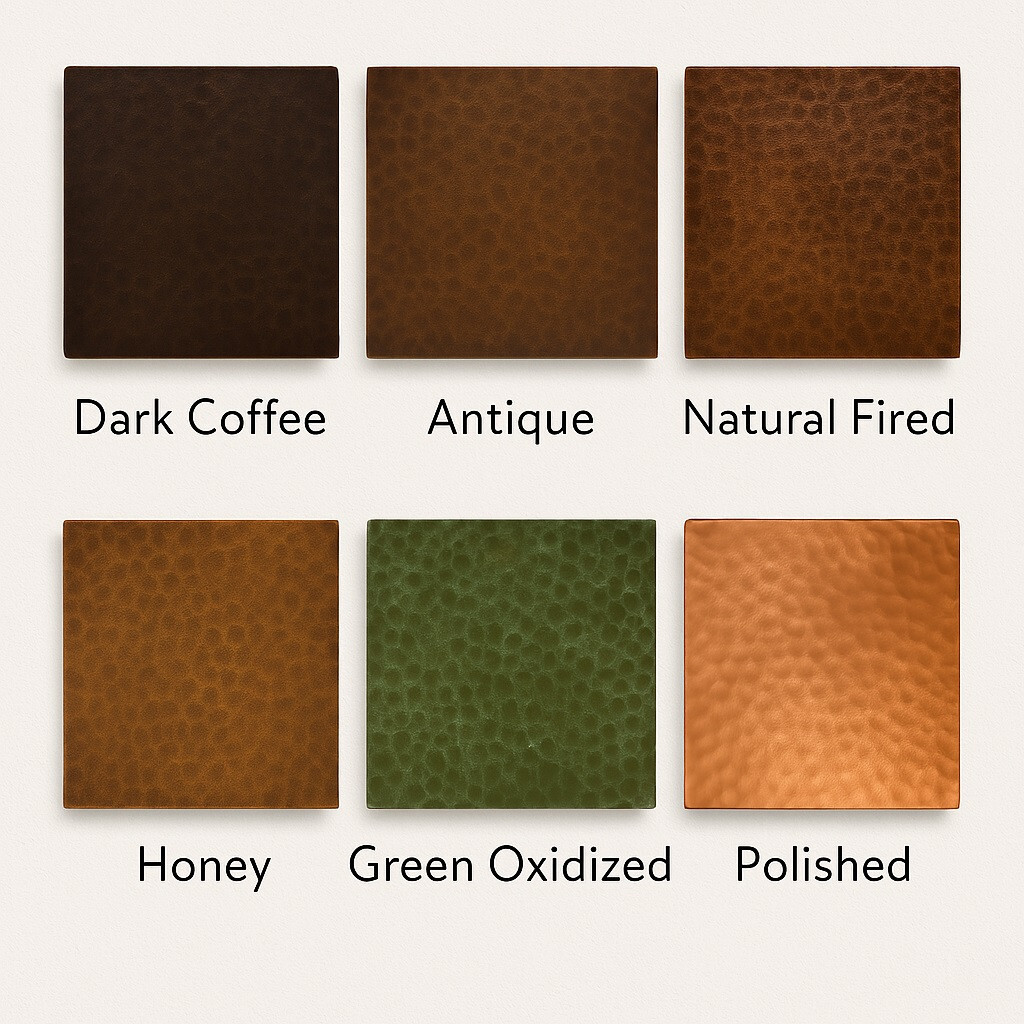
Ball peen hammering is one of the most recognizable hammered copper textures. The rounded end of the hammer creates small indentations that build an organic, overlapping field of dimples. The surface feels lively and handcrafted, with variation that gives copper its classic rustic identity.
This method is widely used for copper range hoods, bathtubs, sinks, tabletops, and lighting because it celebrates imperfection as beauty. It also brings a practical benefit. Repeated hammering work hardens the copper, increasing stiffness and resilience. The textured surface also helps disguise minor wear because light breaks across the dimples instead of showing every small mark.
Cross peen and linear texturing
Cross peen hammering creates direction and structure. The striking face is wedge-shaped, so it forms fine linear marks rather than round dimples. When applied evenly, the result can look like grain, striation, or brushed movement across the surface, depending on hammer angle and force.
This technique is especially striking on large flat planes such as copper wall panels and range hood faces. It suits modern and industrial interiors because the lines feel architectural and controlled. It adds texture without making the surface feel overly rustic.
Chasing and repousse for sculpted detail
Chasing and repousse are used when the goal is not a uniform texture but a sculpted design. Repousse forms raised shapes by working from the back of the sheet into a supportive bed. Chasing refines and sharpens those raised forms from the front using small punches and chisels to define lines, add shading, and build fine surface detail.
These techniques can create floral motifs, scrollwork, animals, and narrative scenes. They are labor intensive and often reserved for decorative panels, plaques, and custom statement pieces. Unlike broad hammering patterns, chasing and repousse focus on composition and storytelling, turning copper into functional art.
Deep dimpling and rugged textures
Deep dimpling uses stronger strikes spaced further apart to create bold impressions and dramatic topography. The surface shows higher contrast between peaks and valleys, which creates shadow and depth. It feels rugged and tactile, with a weathered character that works beautifully in rustic and farmhouse interiors.
This finish is often chosen for focal points such as oversized range hoods and statement bathtubs because it reads strongly from across a room. The heavy texture also breaks reflections and hides everyday wear, making it both expressive and practical for high-use spaces.
Stippling for fine grain matte texture
Stippling sits at the opposite end of the texture spectrum. It uses repeated tapping with a fine tool or textured punch to create many tiny indentations that read as a soft matte surface. Stippling is often used selectively rather than across an entire piece.
It can create contrast in chased designs by matting the background so the raised motif stands out. It can also be used on trim, moldings, or interior bowl areas to reduce glare and add subtle refinement. Stippling is understated, but it shows deep control and careful workmanship.
Random texturing and artisan flair
Not all hammered finishes aim for uniformity. Random texturing embraces irregularity and variation as the design language. Artisans may use different hammer faces, handmade stamps, or freehand strike patterns to create an organic surface that feels natural and unrepeatable.
This approach works well in rustic and bohemian interiors where individuality matters more than perfect repetition. It also reinforces one of the main appeals of handmade copper: no two pieces are exactly alike. Random texture can also be layered with other methods to create more complex, artistic contrast.
The function behind the form
Hammering is not only aesthetic. It changes the metal. Repeated strikes work harden copper, making it stiffer and more resilient. This is valuable for functional pieces such as range hoods, sinks, and countertops where strength matters alongside beauty.
Hammered texture also helps hide everyday wear. Small scratches and marks are less visible because the surface already has movement. Light breaks across the pattern and draws the eye to the handcrafted texture rather than minor imperfections.
Modern tools and ancient traditions
Some workshops use pneumatic hammers, rollers, or rotary tools to improve efficiency, but many artisans still rely on traditional hand tools for the final surface character. A hand strike carries rhythm and intention that machines cannot replicate. It gives the surface life and warmth.
Even when modern tools assist with shaping, finishing often returns to hand work to create authenticity and depth. This blend of old and new allows artisans to preserve cultural roots while expanding what is possible in form, scale, and texture.
Choosing the right texture for your copper feature
Understanding these techniques helps you choose the finish that fits your space. Planished copper suits contemporary rooms with clean lines and refined hardware. Ball peen and deep dimpling support rustic kitchens and Old World bathrooms with wood, stone, and iron accents. Cross peen texture adds disciplined movement for industrial and minimalist designs. Chasing and repousse add ornamental detail when you want copper to feel like art.
Each texture changes how light interacts with the surface, how the piece feels under the hand, and how it will age over time. That is why finish selection matters as much as silhouette when choosing a copper range hood, sink, bathtub, or feature panel.
Conclusion: the soul of copper is in the strike
Every hammered copper piece holds a hidden story told through touch, technique, and tradition. Hammering is more than a method. It is a language of rhythm and intention. Whether through the soft shimmer of planishing, the bold dimples of ball peen work, or the sculpted detail of chasing, hammered copper invites you to feel craft in a way smooth surfaces cannot. Choosing hammered texture means choosing a finish with heritage, character, and lasting presence.
Explore more about copper artistry and design inspiration on the Rustica House blog, or visit our handmade copper range hood collection to find a piece textured with care, shaped by hand, and full of enduring soul.