 US Dollar
 Euro
Euro
 Australian Dollar
 Canadian Dollar
 Polish Zloty
 British Pound

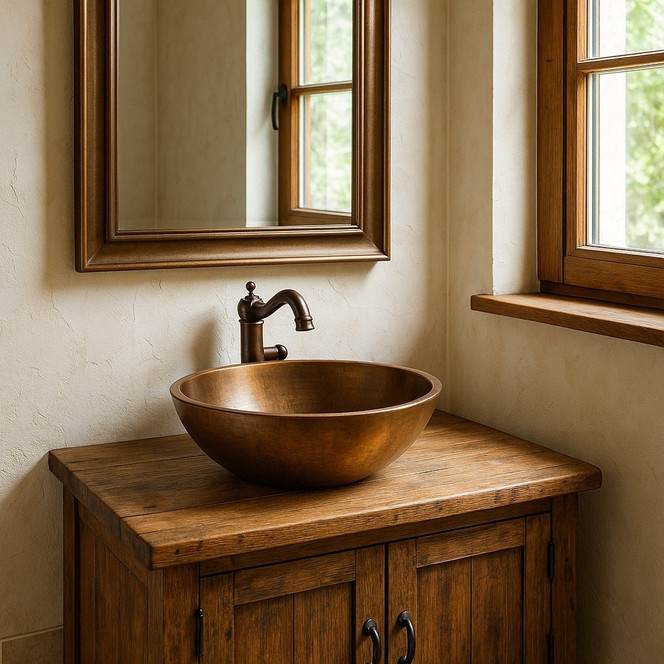
A bronze sink can define the whole vanity. It adds warmth and depth. It also brings artisan character. This buying guide keeps decisions clear. It focuses on fit, quality, and finish. It avoids vague design advice. Start by browsing our bronze bathroom sinks, then use the steps below to choose with confidence, protect your installation budget, and get a sink that feels right every day.
Why bronze sinks are worth considering
Bronze stands out because it feels substantial and authentic, and because it ages with character instead of looking worn, which makes it ideal for bathrooms where you want a warm focal point that can handle daily use without feeling delicate.
What “handmade” should mean in bronze sinks
A well made bronze sink should show controlled variation rather than random flaws, meaning you may see subtle differences in tone and texture, but the rim should feel even, the bowl should feel balanced, and the overall form should look intentional from every angle.
Decide your sink installation type first
Installation type affects cutout planning, faucet selection, and the final look, so you should decide whether you want a vessel, drop in, or undermount sink before you commit, since changing the installation style later can require a new countertop cut or new plumbing placement.
Vessel sinks
Vessel sinks sit above the counter and showcase the bronze form, which makes them great for statement vanities, but they require correct faucet height and a cleaning routine that includes wiping water around the base where it meets the countertop.
Drop in sinks
Drop in sinks rest on the countertop edge, making them practical for many remodels, because they often simplify installation and can work well when you want a secure rim seat and a straightforward seal line.
Undermount sinks
Undermount sinks create a seamless counter edge look, which feels refined with stone or solid surfaces, but they require precise cutouts and strong under support, so it is smart to confirm cabinet and countertop readiness before you choose this style.
Choose a shape that matches your bathroom style
Shape controls the visual mood and the daily feel, so round and oval sinks tend to soften a space, rectangular sinks tend to look more architectural, and geometric shapes feel sculptural, which means your best choice is the one that fits your vanity lines and your mirror scale.
Round and oval shapes
Round and oval bowls feel friendly and balanced, and they often make small bathrooms feel less rigid, while also helping water flow smoothly toward the drain with fewer sharp interior corners.
Rectangular shapes
Rectangular sinks look structured and modern, and they can feel especially strong in bathrooms with clean cabinetry lines, squared mirrors, and crisp stone counters that support an architectural look.
Geometric and statement shapes
Geometric bronze sinks create a focal point that reads like functional sculpture, but they look best when the rest of the vanity is calmer, so the sink does not compete with busy tile patterns or heavily veined counters.
Get the sizing right for comfort and proportion
Sink size affects how comfortable the vanity feels, how much counter space you keep for daily items, and how balanced the sink looks under the mirror, so measure vanity width and depth first, then choose a sink that leaves practical landing space on both sides.
Depth and splash behavior
Bowl depth changes splash control and handwashing comfort, so deeper bowls often feel more contained, while shallower bowls can look sleek but may need a well matched faucet reach and a gentler water stream to keep water off the rim.
Understand patina and finish before you buy
Patina is not just color, it is the surface character that makes bronze feel alive, so you should choose a finish that matches your fixed elements like counters and hardware, while also accepting that bronze will develop subtle changes over time.
Light and warm bronze tones
Lighter bronze tones can brighten a vanity and pair well with white cabinetry, warm stone, and natural wood, while still delivering depth that feels richer than standard ceramic finishes.
Darker aged patinas
Darker patinas add grounding contrast and often pair beautifully with iron hardware, darker stone, and rustic textures, making the sink feel anchored and intentional in larger bathrooms or high contrast palettes.
Check craftsmanship signals that matter
Quality shows up in the details you touch daily, so look for a rim that feels stable and even, a bowl that feels symmetrical, and edges that feel finished, because those cues usually matter more than decorative detail once the sink is installed.
Wall thickness and weight feel
A more substantial feel often signals durability and better forming, so when comparing options, choose the sink that feels stable and well built, since thin or flimsy edges can feel less secure during daily use.
Pair the sink with the right faucet setup
Your faucet choice affects both function and appearance, so plan spout reach and height early, aiming for water to land near the bowl center, because poor reach can cause rim splashing, constant wipe downs, and mineral rings that distract from the bronze finish.
Match metal tones for a cohesive look
Bronze sinks look most intentional when the surrounding metal finishes complement the sink tone, so choose fixtures that harmonize rather than fight, because mixed undertones can make a vanity look pieced together instead of designed.
Plan the drain and overflow details
Drain compatibility is a must check item, so confirm whether your sink is designed for an overflow or for a non overflow drain, because the wrong drain choice can cause fit problems and can complicate the seal at the drain flange.
Know what maintenance really looks like
Bronze does not require constant polishing, but it does reward gentle habits, so plan for rinse and dry routines, mild soap cleaning, and avoiding harsh bathroom chemicals, because these simple steps protect the patina and keep the surface looking intentionally aged.
Waxing expectations
If you prefer a more even appearance, occasional wax can help protect the surface and soften water spotting, while buyers who enjoy natural aging can maintain a gentle cleaning routine and allow the finish to develop character over time.
Think about timeline and project sequencing
Many bronze sinks are artisan made and may involve production lead times, so plan your order early in a remodel, because countertops, faucet rough in, and vanity selection often depend on sink dimensions and installation type.
Budget and value: what you are paying for
Bronze sinks cost more than basic options because you are paying for material, forming, finishing, and the visual impact of a statement piece, so value is best measured by daily satisfaction, durability, and how strongly the sink elevates the entire vanity zone.
Bronze sink buying checklist
Use this checklist to keep your decisions in the right order and avoid expensive rework during installation.
- Confirm installation type before countertop work
- Measure vanity width and depth for real clearance
- Choose shape that matches vanity and mirror lines
- Pick a finish that fits your fixed surfaces
- Plan faucet reach and height for center landing
- Confirm drain style and overflow compatibility
- Check cabinet interior clearance for bowl depth
- Plan gentle care habits for patina longevity
- Order early if lead time is expected
Conclusion
A bronze bathroom sink is both a functional fixture and a long term design anchor, so the best buying decision starts with installation type and measurements, then moves to shape and finish, and ends with faucet and drain planning, which together ensure the sink looks balanced, performs cleanly, and develops beautiful character with daily use.